
Managing multiple email accounts has become a common part of modern life. Whether you are a business owner, blogger, freelancer, digital marketer, or someone who manages several online projects, it is perfectly normal to have more than one email address. Many people use separate email accounts for personal communication, business inquiries, customer support, newsletters, affiliate marketing, and website administration.
However, handling multiple inboxes can quickly become overwhelming if you do not have a proper system in place. Constantly logging in and out of different email accounts wastes valuable time, increases the chance of missing important messages, and reduces overall productivity. As the number of email accounts grows, keeping everything organized becomes even more challenging.
Fortunately, there is an easier solution.
Instead of checking every mailbox individually, you can manage multiple email accounts from a single Gmail account. Gmail provides built-in features that allow you to send, receive, and organize emails from multiple addresses without switching between accounts repeatedly.
In this guide, you will learn how to manage multiple email accounts effectively using Gmail. By the end of this tutorial, you will have a centralized inbox that makes email management faster, simpler, and much more efficient.
Table of Contents
How to Manage Multiple Email Accounts Effectively?
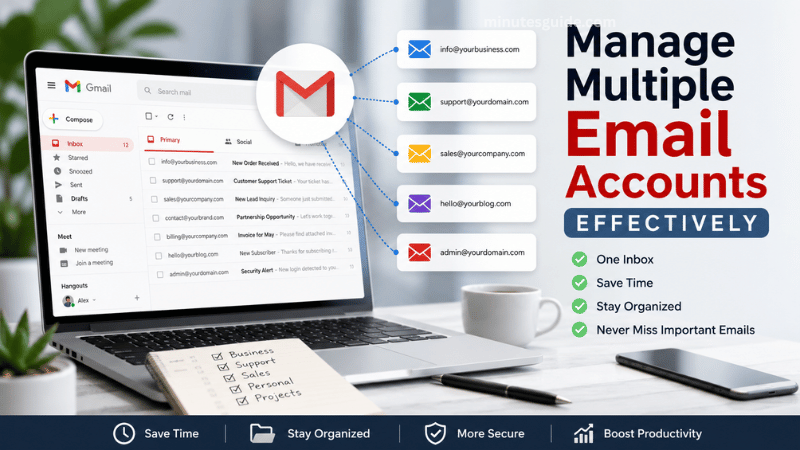
Why You Need to Manage Multiple Email Accounts
Many professionals maintain several email addresses for different purposes. Separating communication helps keep personal messages away from business correspondence while improving organization.
Some common reasons for having multiple email accounts include:
- Personal email
- Business email
- Customer support email
- Sales inquiries
- Affiliate marketing
- Website administration
- Newsletter subscriptions
- Client communications
- Team collaboration
- Online shopping and registrations
Although separating these purposes makes organization easier, checking every mailbox individually can become extremely time-consuming.
Imagine receiving emails across five or six different accounts throughout the day. Logging into each account several times daily can significantly reduce productivity. Even worse, you may accidentally overlook important messages from customers or business partners.
Managing everything from one place solves these problems.
Benefits of Managing Multiple Email Accounts in One Gmail Inbox
Using Gmail as your central email hub offers several advantages.
Save Time Every Day
Instead of logging into different email accounts individually, you only need to access one Gmail account. This significantly reduces the amount of time spent switching between accounts.
Never Miss Important Emails
Since all incoming emails arrive in one inbox, it becomes much easier to monitor new messages. Important business inquiries are less likely to be overlooked.
Reply Using Different Email Addresses
One of Gmail's best features is the ability to send emails using different email addresses. Your recipients will continue seeing emails from your business address instead of your Gmail address.
Better Organization
Gmail offers labels, filters, categories, stars, and search features that make organizing emails incredibly simple.
Increased Productivity
A centralized inbox allows you to focus on responding to emails instead of managing multiple logins.
What You Need Before You Begin
Before configuring Gmail, make sure you have the following information:
- Your Gmail account
- The email account you want to add
- SMTP server information
- Username
- Password
- SMTP port number
- Internet connection
If you are using a business email hosted by your web hosting provider, you may need to obtain the SMTP settings from your hosting control panel or support team.
How to Manage Multiple Email Accounts Using Gmail
Follow the steps below to configure Gmail so you can send and receive emails from multiple accounts.
Step 1: Log In to Your Gmail Account
Open Gmail in your web browser and sign in using your primary Gmail account.
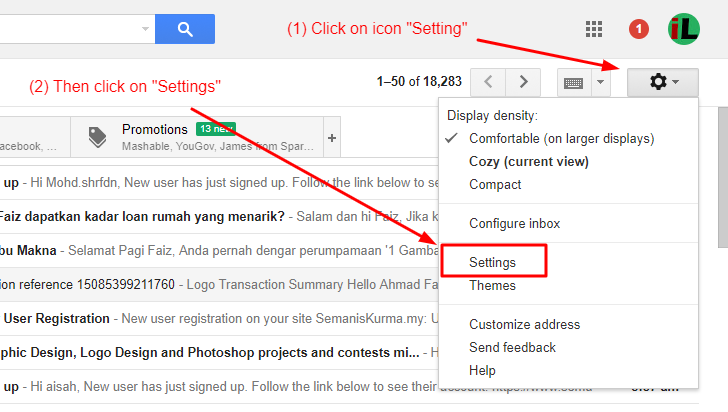
Once you have successfully logged in, locate the Settings icon in the upper-right corner of the Gmail interface.
Click the Settings icon, then select "See all settings."
This will open Gmail's complete settings page.
Step 2: Open the Accounts and Import Tab
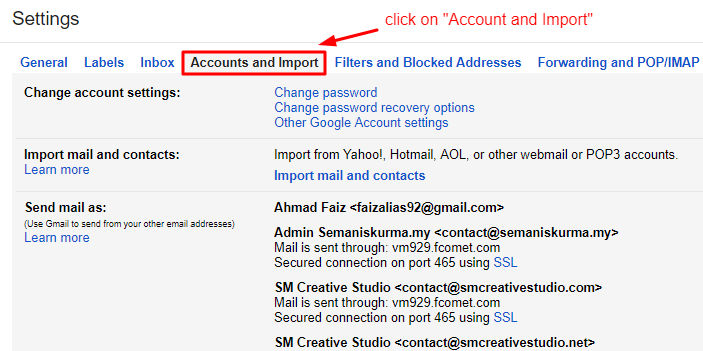
Inside the Settings page, click the "Accounts and Import" tab.
This section contains various options for managing external email accounts, importing contacts, sending emails as different addresses, and configuring additional mail settings.
Scroll through the page until you find the option labeled:
"Send mail as"
This feature allows Gmail to send emails using another email address.
Step 3: Click "Add Another Email Address"
Under the "Send mail as" section, click:
"Add another email address"
A new popup window will appear.
You will now begin adding the email address that you want Gmail to manage.

Step 4: Enter Your Email Information
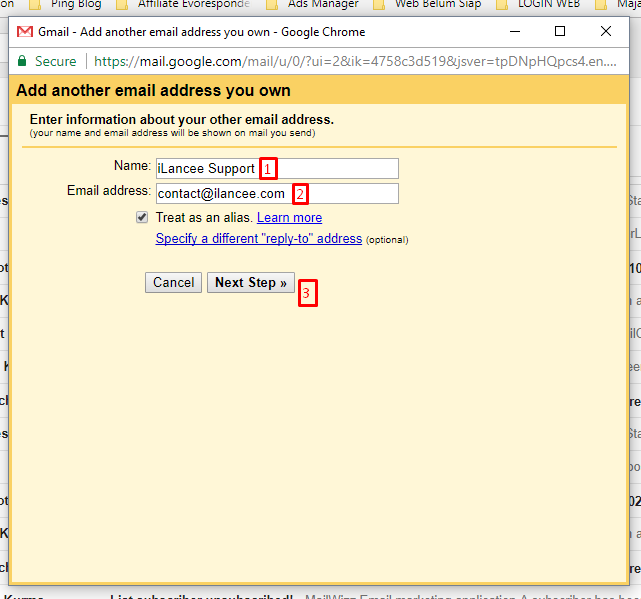
Complete the required fields carefully.
Your Name
Enter the name you want recipients to see whenever you send an email.
This could be:
- Your full name
- Your company name
- Your business brand
Choose the option that best represents your professional identity.
Email Address
Enter the email address you wish to manage inside Gmail.
Double-check the spelling to ensure there are no mistakes.
Treat as an Alias
For most users, leaving this option enabled is recommended. It allows Gmail to treat the added email address as another identity that belongs to you.
After completing the required fields, click:
"Next Step"
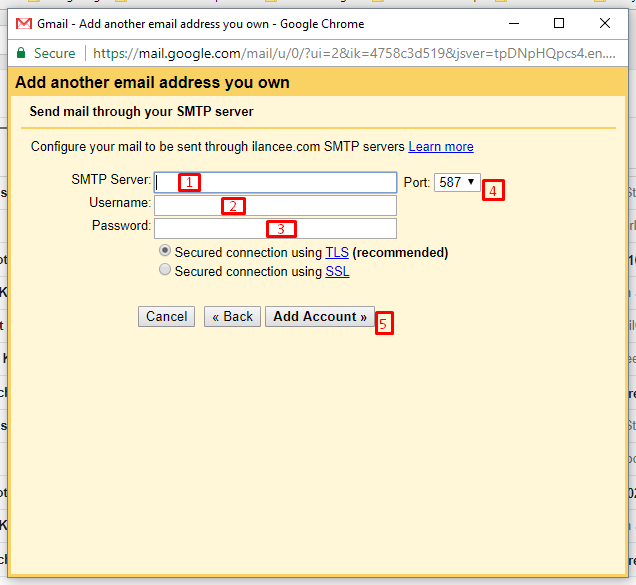
Step 5: Enter Your SMTP Server Information
This step connects Gmail with your external email account.
You will need the SMTP settings provided by your email hosting provider.
Fill in the following details:
SMTP Server
Enter the outgoing mail server provided by your hosting company.
Common examples include:
- mail.yourdomain.com
- smtp.yourdomain.com
Always verify the correct server with your hosting provider.
Username
Enter your full email address or SMTP username depending on your hosting configuration.
Password
Enter the password associated with your email account.
Use the correct credentials to avoid authentication errors.
Port Number
Most hosting providers recommend:
- Port 587 (TLS)
- Port 465 (SSL)
If your provider specifically recommends Port 587, select it.
Secure Connection
Choose the recommended encryption method provided by your hosting provider.
Using encryption protects your email communications.
Once everything has been completed correctly, click:
"Add Account"
Step 6: Verify Your Email Address
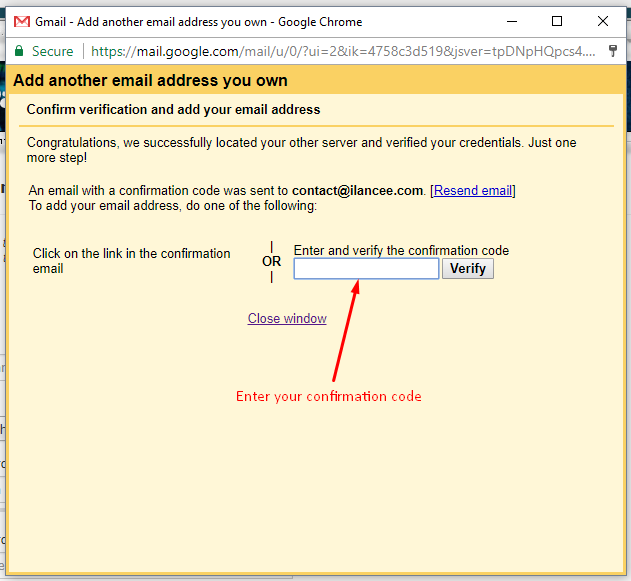
Gmail will now send a verification email to the email address you just added.
Open that mailbox and locate the confirmation email.
You will receive either:
- A verification link
- A verification code
Click the verification link or copy the code into Gmail to complete the setup.
Once verified, Gmail will successfully add your email account.
Receiving Emails From Multiple Accounts
Adding an email address under "Send mail as" only allows you to send emails using that address.
If you also want Gmail to receive emails from another mailbox, you should configure email fetching.
Inside the "Accounts and Import" page, locate:
"Check mail from other accounts"
Click:
"Add a mail account"
Then follow the wizard to connect your mailbox.
After setup, Gmail will periodically retrieve emails from your other account and display them inside your Gmail inbox.
This means you only need to check one inbox throughout the day.
Organize Multiple Email Accounts Using Labels
As your inbox grows, organization becomes increasingly important.
Fortunately, Gmail provides Labels that function like folders but offer much greater flexibility.
For example, you can create labels such as:
- Business
- Clients
- Sales
- Support
- Personal
- Affiliate
- Finance
Incoming emails can automatically receive labels through Gmail filters.
This makes locating messages much faster.
Use Filters to Automate Email Management
Filters are one of Gmail's most powerful productivity features.
Instead of manually organizing emails, Gmail can perform actions automatically.
For example, Gmail can:
- Apply labels
- Archive messages
- Mark emails as important
- Forward emails
- Skip the inbox
- Delete spam automatically
These automations help keep your inbox clean and organized with minimal effort.
Best Practices for Managing Multiple Email Accounts
Successfully managing several email accounts requires more than simply combining inboxes.
Here are several best practices you should follow.
Use Strong Passwords
Every email account should have a unique and secure password.
Avoid reusing passwords across multiple accounts.
Password managers can help generate and store secure passwords safely.
Enable Two-Factor Authentication
Two-factor authentication (2FA) adds an extra layer of protection.
Even if someone discovers your password, they cannot easily access your account without the second verification step.
Review Your Inbox Regularly
Although Gmail centralizes your messages, you should still review your inbox consistently throughout the day.
Responding promptly improves professionalism and customer satisfaction.
Archive Old Emails
Archiving completed conversations keeps your inbox clean without permanently deleting important records.
Avoid Mixing Personal and Business Communication
Even when everything is managed inside one Gmail account, continue using separate email addresses for different purposes.
This maintains professionalism and improves organization.
Common Problems and Solutions
Verification Email Never Arrives
Check your Spam or Junk folder.
If it is not there, resend the verification email.
SMTP Authentication Failed
Verify your username and password carefully.
Also confirm that your SMTP server information matches your hosting provider's settings.
Unable to Send Emails
Review your SMTP server, port number, and encryption settings.
Incorrect configurations are the most common cause of sending failures.
Emails Are Not Being Received
Confirm that POP3 access is enabled for your external email account if Gmail is retrieving messages using POP.
Also verify that Gmail's "Check mail from other accounts" feature has been configured correctly.
Frequently Asked Mistakes
Many users accidentally make small configuration mistakes during setup.
Common mistakes include:
- Entering an incorrect SMTP server
- Using the wrong port number
- Typing an incorrect password
- Forgetting to verify the email account
- Using outdated hosting settings
- Disabling secure connections
Carefully reviewing every setting usually resolves these issues.
Conclusion
Learning how to manage multiple email accounts effectively can dramatically improve your daily productivity. Instead of wasting time logging into different inboxes throughout the day, Gmail allows you to centralize your email management in one convenient location.
With features such as multiple sender identities, email retrieval, labels, filters, and automated organization, Gmail provides a powerful solution for individuals and businesses alike. Whether you manage two email accounts or twenty, having a single dashboard simplifies communication, reduces the risk of missing important messages, and helps you maintain a more organized workflow.
By following the steps outlined in this guide, you can configure Gmail to handle all of your email accounts efficiently while maintaining a professional communication experience. Once everything is set up correctly, you'll spend less time managing inboxes and more time focusing on the work that truly matters.
Frequently Asked Questions (FAQs)
Why should I manage multiple email accounts in one place?
Managing multiple email accounts from a single inbox saves time, improves productivity, and reduces the risk of missing important emails. Instead of logging in and out of several accounts throughout the day, you can monitor and respond to all your messages from one centralized location.
Can Gmail manage multiple email accounts?
Yes. Gmail allows you to add multiple email accounts so you can send and receive emails from different addresses within one interface. This feature works with many email providers that support POP3 and SMTP, making Gmail a convenient email management hub.
Is it free to manage multiple email accounts with Gmail?
Yes. Gmail's built-in features for adding additional email accounts are available at no extra cost. However, if you're using a custom business email, your hosting provider may charge separately for hosting the email account itself.
Can I send emails using my business email address through Gmail?
Yes. Gmail lets you send emails using your business email address by configuring the appropriate SMTP server settings. Recipients will see your business email as the sender instead of your Gmail address.
How many email accounts can I add to Gmail?
Gmail supports multiple email accounts, although practical limits may apply depending on Google's policies and your account usage. Most users can comfortably manage several personal and business email addresses from a single Gmail account.
Will replies come from the correct email address?
Yes. When composing a new email or replying to a message, Gmail allows you to choose which email address you want to send from. If configured correctly, replies will appear to come from the same email address that received the original message.
What information do I need before adding another email account?
Typically, you'll need your email address, password, SMTP server address, SMTP port number, username, and the recommended security protocol (such as TLS or SSL). If you're unsure of these settings, your email hosting provider can supply them.
Is it safe to manage multiple email accounts in Gmail?
Yes, provided you follow good security practices. Use strong, unique passwords for every account, enable two-factor authentication (2FA), and regularly review your account security settings to help protect your emails from unauthorized access.
Can I organize emails from different accounts automatically?
Yes. Gmail includes powerful features such as labels, filters, categories, and rules that can automatically organize incoming emails. You can sort messages into folders, apply labels, archive emails, or forward them based on conditions you define.
What should I do if Gmail cannot connect to my email account?
First, verify that your SMTP and POP3 settings are correct. Double-check your username, password, server address, and port numbers. If the problem persists, contact your email hosting provider to confirm the correct configuration details or check whether additional security settings are required.
References
- How to manage multiple email accounts: A practical guide - missiveapp.com
- How to Manage Multiple Emails Efficiently? - blackhatworld.com