
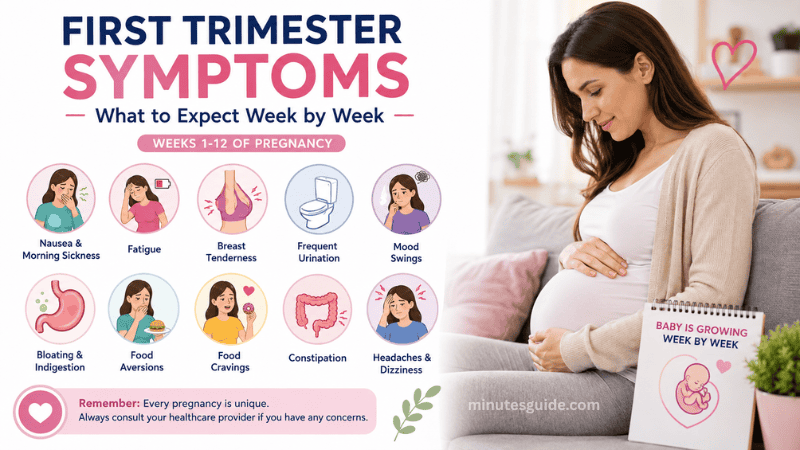
First Trimester Symptoms: What to Expect Week by Week | Pregnancy is a remarkable journey that brings significant physical, emotional, and hormonal changes from the very beginning. For many women, the first trimester is the period when the body works hardest to support the developing baby, even though the pregnancy may not yet be visible. Understanding First Trimester Symptoms can help expectant mothers recognize what is normal, prepare for upcoming changes, and seek medical advice when necessary.
The first trimester covers weeks 1 through 12 of pregnancy. During this time, the fertilized egg implants into the uterus, major organs begin forming, and the placenta develops to nourish the growing baby. At the same time, hormone levels increase dramatically, leading to a variety of symptoms that differ from one woman to another.
Some women experience only mild discomfort, while others may notice multiple symptoms that interfere with daily activities. Every pregnancy is unique, and symptom intensity can vary not only between different women but also between different pregnancies in the same woman.
This comprehensive guide explains First Trimester Symptoms week by week, highlights common physical and emotional changes, discusses when symptoms become concerning, and offers practical tips for managing early pregnancy comfortably.
Table of Contents
First Trimester Symptoms: What to Expect Week by Week
Understanding the First Trimester
The first trimester begins on the first day of your last menstrual period and continues until the end of week 12. Although conception usually occurs around week 2, healthcare providers calculate pregnancy from the first day of the last menstrual cycle.
During these twelve weeks, the baby's development is incredibly rapid. The heart begins beating, the brain starts forming, limbs develop, and every major organ system begins taking shape. Because these developmental milestones occur so early, proper nutrition, prenatal care, and healthy lifestyle choices become especially important.
At the same time, hormonal changes—particularly rising levels of human chorionic gonadotropin (hCG), progesterone, and estrogen—are largely responsible for many of the common First Trimester Symptoms experienced by pregnant women.
Why Do First Trimester Symptoms Occur?
Pregnancy hormones prepare the body to support fetal growth and maintain the pregnancy.
Several hormones play important roles:
- Human Chorionic Gonadotropin (hCG)
- Progesterone
- Estrogen
- Relaxin
- Human Placental Lactogen (later in pregnancy)
These hormones affect nearly every organ system, including:
- Digestive system
- Cardiovascular system
- Nervous system
- Urinary system
- Musculoskeletal system
- Skin
As hormone levels continue increasing, symptoms often become more noticeable between weeks 6 and 10 before gradually improving toward the end of the first trimester.
First Trimester Symptoms Week by Week
Weeks 1–2: Preparing for Pregnancy
Technically, pregnancy has not yet occurred during these weeks because ovulation usually happens around week 2.
Most women experience:
- Normal menstrual bleeding
- Ovulation signs
- Mild pelvic discomfort during ovulation
- Increased cervical mucus
There are usually no pregnancy symptoms yet because fertilization has not occurred.
Week 3: Fertilization and Implantation
After fertilization, the embryo begins traveling toward the uterus.
Some women notice:
- Mild implantation cramping
- Very light implantation spotting
- Slight bloating
- Mild fatigue
Many women still feel completely normal during this stage.
Week 4: Missed Period
Week 4 is when many women first suspect pregnancy.
Common First Trimester Symptoms include:
Missed Menstrual Period
A missed period is often the earliest noticeable sign of pregnancy. Women with regular menstrual cycles usually recognize this change quickly.
Mild Cramping
Light cramping occurs as the uterus begins expanding and adjusting to support pregnancy.
Breast Tenderness
Hormonal changes increase blood flow to breast tissue, making the breasts:
- Sore
- Swollen
- Sensitive
- Heavier than usual
Fatigue
Progesterone levels rise significantly, causing overwhelming tiredness even after adequate sleep.
Week 5: Hormones Increase
Symptoms become more noticeable.
Common experiences include:
Morning Sickness
Despite its name, nausea can occur:
- Morning
- Afternoon
- Evening
- Throughout the day
Some women experience nausea without vomiting, while others experience frequent vomiting.
Increased Urination
Growing blood volume and hormonal changes increase kidney function, causing more frequent trips to the bathroom.
Emotional Changes
Mood swings become increasingly common because hormone fluctuations affect neurotransmitters in the brain.
Week 6: Symptoms Intensify
Many women consider week 6 one of the most challenging weeks.
Stronger Nausea
Morning sickness often peaks between weeks 6 and 9.
Triggers include:
- Strong odors
- Greasy foods
- Empty stomach
- Fatigue
Food Cravings
Some women suddenly crave:
- Fruit
- Pickles
- Ice cream
- Salty snacks
- Spicy foods
Food Aversions
Foods previously enjoyed may suddenly become unpleasant due to heightened smell sensitivity.
Heightened Sense of Smell
Pregnancy hormones increase sensitivity to odors, making perfumes, cooking smells, and smoke particularly bothersome.
Week 7: Digestive Changes
The digestive system slows significantly.
Symptoms include:
Constipation
Progesterone relaxes intestinal muscles, slowing bowel movements.
Bloating
Gas and slower digestion create abdominal fullness and discomfort.
Heartburn
Although more common later in pregnancy, some women develop heartburn during the first trimester.
Excess Saliva
Some women produce more saliva than usual, particularly when nausea is severe.
Week 8: Rapid Hormonal Changes
Symptoms often reach their highest intensity.
Extreme Fatigue
Energy levels may feel dramatically lower because the body is producing the placenta while supporting rapid fetal growth.
Headaches
Hormonal fluctuations and increased blood volume contribute to pregnancy headaches.
Dizziness
Blood vessels relax during pregnancy, occasionally causing lightheadedness.
Mild Shortness of Breath
The body's oxygen requirements increase, making some women feel winded during routine activities.
Week 9: Emotional Adjustment
Physical symptoms continue while emotional changes become more noticeable.
Mood Swings
Women may experience:
- Happiness
- Anxiety
- Irritability
- Tearfulness
Sometimes these emotions change several times within a single day.
Vivid Dreams
Hormonal changes often influence sleep quality and dream intensity.
Difficulty Sleeping
Despite fatigue, many women find it difficult to remain asleep throughout the night.
Week 10: Baby Develops Rapidly
The embryo is now officially called a fetus.
Symptoms remain similar but may include:
Round Ligament Discomfort
The ligaments supporting the uterus begin stretching, causing brief sharp pains.
Visible Veins
Increased blood volume may make veins more noticeable, especially on the breasts.
Increased Vaginal Discharge
Thin, milky discharge known as leukorrhea helps protect against infection.
Week 11: Symptoms Begin Stabilizing
For some women, symptoms gradually improve.
Possible experiences include:
- Less nausea
- Improved appetite
- Continued breast tenderness
- Ongoing fatigue
- Occasional headaches
Not everyone experiences symptom relief this early.
Week 12: End of the First Trimester
Many women begin feeling better.
Common symptoms include:
- Increased energy
- Reduced nausea
- Improved mood
- Mild bloating
- Frequent urination
Although symptoms may lessen, hormone levels remain elevated throughout pregnancy.
Most Common First Trimester Symptoms
| Symptom | Common Cause | Typical Timing |
|---|---|---|
| Missed period | Rising hCG | Week 4 |
| Morning sickness | hCG and estrogen | Weeks 5–10 |
| Fatigue | Progesterone | Weeks 4–12 |
| Breast tenderness | Estrogen and progesterone | Weeks 4–12 |
| Frequent urination | Increased blood flow | Weeks 5–12 |
| Mood swings | Hormonal changes | Throughout trimester |
| Bloating | Slower digestion | Weeks 5–12 |
| Constipation | Progesterone | Weeks 6–12 |
| Food cravings | Hormonal influence | Weeks 6–12 |
| Food aversions | Increased smell sensitivity | Weeks 5–10 |
Less Common First Trimester Symptoms
Although less frequent, some women experience additional symptoms.
These may include:
- Metallic taste in the mouth
- Nasal congestion
- Acne
- Dry skin
- Oily skin
- Mild acne flare-ups
- Gum sensitivity
- Nosebleeds
- Skin pigmentation changes
- Increased sweating
These symptoms are generally caused by increased blood flow and hormonal fluctuations.
Emotional Symptoms During the First Trimester
Pregnancy affects emotional health just as much as physical health.
Common emotional changes include:
Anxiety
Many first-time mothers worry about:
- Miscarriage
- Baby's health
- Labor
- Parenting
These concerns are common and often decrease after the first trimester.
Mood Swings
Rapid hormonal changes influence brain chemistry, making emotional responses stronger than usual.
Excitement
Many women experience overwhelming happiness while preparing for their growing family.
Irritability
Poor sleep, nausea, and physical discomfort can contribute to frustration and irritability.
Tips for Managing First Trimester Symptoms
Most First Trimester Symptoms can be managed with simple lifestyle adjustments.
Eat Small, Frequent Meals
Eating every two to three hours helps stabilize blood sugar and reduce nausea.
Stay Hydrated
Drink plenty of water throughout the day, especially if vomiting occurs frequently.
Get Plenty of Rest
Fatigue is one of the body's signals that additional rest is needed during pregnancy.
Avoid Strong Odors
Reducing exposure to strong smells can minimize nausea.
Exercise Gently
Light physical activities such as walking or prenatal yoga may improve circulation, mood, and digestion after consulting a healthcare provider.
Take Prenatal Vitamins
Prenatal vitamins containing folic acid help support healthy fetal development and reduce the risk of neural tube defects.
Wear Comfortable Clothing
Loose-fitting clothing can help reduce abdominal discomfort and bloating.
Healthy Habits During the First Trimester
Maintaining healthy habits supports both maternal well-being and fetal development.
Recommended habits include:
- Eating a balanced diet rich in fruits, vegetables, whole grains, lean proteins, and healthy fats.
- Taking prenatal vitamins consistently as directed.
- Avoiding smoking, vaping, alcohol, and recreational drugs.
- Limiting caffeine intake according to your healthcare provider's recommendations.
- Getting regular prenatal checkups.
- Practicing good sleep hygiene.
- Managing stress through relaxation techniques, meditation, or gentle exercise.
Warning Signs That Require Immediate Medical Attention
While many First Trimester Symptoms are normal, some symptoms require prompt evaluation by a healthcare provider.
Seek medical attention immediately if you experience:
- Heavy vaginal bleeding similar to or heavier than a menstrual period.
- Severe abdominal or pelvic pain.
- Persistent vomiting that prevents you from keeping fluids down.
- High fever.
- Severe dizziness or fainting.
- Painful urination accompanied by fever.
- Leakage of clear fluid from the vagina.
- Severe one-sided pelvic pain, especially when accompanied by dizziness or shoulder pain, as this could indicate an ectopic pregnancy.
Prompt medical assessment can help identify complications early and ensure appropriate treatment.
When Do First Trimester Symptoms Usually Improve?
For many women, symptoms begin improving between weeks 11 and 14 as hCG levels stabilize and the placenta becomes more established.
However, every pregnancy is different.
Some women experience relief earlier, while others continue having symptoms well into the second trimester. A smaller number may continue experiencing nausea throughout pregnancy, a condition that should be discussed with a healthcare provider if it becomes severe or affects nutrition and hydration.
The absence of symptoms does not necessarily indicate a problem, just as having strong symptoms does not necessarily mean the pregnancy is healthier. Symptom patterns vary widely among individuals.
Conclusion
Experiencing First Trimester Symptoms is a natural part of early pregnancy, reflecting the remarkable changes taking place within the body as it supports the development of a new life. From the first missed period and breast tenderness to morning sickness, fatigue, food aversions, and emotional fluctuations, these symptoms often evolve week by week as hormone levels rise and the baby grows rapidly.
Although the first trimester can be physically and emotionally demanding, understanding what to expect helps reduce uncertainty and allows expectant mothers to better care for themselves. Maintaining a nutritious diet, staying hydrated, getting adequate rest, attending regular prenatal appointments, and recognizing warning signs that require medical attention all contribute to a healthier pregnancy.
Most importantly, remember that every pregnancy follows its own course. Whether symptoms are mild, intense, or fluctuate throughout the first trimester, staying informed and working closely with a healthcare provider can provide reassurance and support throughout this exciting stage of pregnancy.
Conclusion
When do first trimester symptoms usually begin?
Most first trimester symptoms begin between weeks 4 and 6 of pregnancy, although some women may notice subtle changes such as fatigue or mild cramping even earlier. Every pregnancy is different, so the timing and intensity of symptoms can vary.
What are the most common first trimester symptoms?
The most common first trimester symptoms include a missed period, nausea or morning sickness, fatigue, breast tenderness, frequent urination, bloating, constipation, mood swings, food cravings, and food aversions. These symptoms are primarily caused by hormonal changes that support the developing pregnancy.
Are first trimester symptoms the same for every woman?
No. Every pregnancy is unique. Some women experience several symptoms, while others have only mild discomfort or very few symptoms. Even the same woman may have different experiences in different pregnancies.
When does morning sickness usually start?
Morning sickness commonly starts around weeks 5 to 6 of pregnancy. It often reaches its peak between weeks 8 and 10 and begins to improve by the end of the first trimester, although some women may continue experiencing nausea into the second trimester.
Is it normal to have mild cramping during the first trimester?
Yes. Mild cramping without heavy bleeding is often a normal part of early pregnancy as the uterus expands and the embryo implants. However, severe pain or cramping accompanied by heavy bleeding should be evaluated by a healthcare provider immediately.
Why am I so tired during the first trimester?
Fatigue is one of the earliest and most common first trimester symptoms. Rising progesterone levels, increased blood production, and the body's efforts to support the baby's rapid development all contribute to lower energy levels.
Can first trimester symptoms come and go?
Yes. Pregnancy symptoms can fluctuate from day to day. Some women notice that symptoms temporarily improve before returning later. Changes in symptom intensity are often normal and usually reflect normal hormonal variations.
Is it possible to have a healthy pregnancy without first trimester symptoms?
Yes. Some women experience very few or even no noticeable first trimester symptoms and still have completely healthy pregnancies. Regular prenatal checkups and ultrasound examinations provide more reliable information about pregnancy health than symptoms alone.
What foods can help reduce morning sickness?
Eating small, frequent meals throughout the day, choosing bland foods such as crackers, toast, rice, bananas, and oatmeal, staying hydrated, and avoiding greasy or strongly scented foods may help reduce nausea. Some women also find relief with ginger or vitamin B6 supplements after consulting their healthcare provider.
When should I contact my doctor about first trimester symptoms?
You should contact your healthcare provider immediately if you experience heavy vaginal bleeding, severe abdominal pain, persistent vomiting that prevents you from keeping fluids down, high fever, severe dizziness, fainting, painful urination with fever, or severe one-sided pelvic pain. These symptoms may indicate complications requiring prompt medical attention.
Do all women experience food cravings during the first trimester?
No. While many women develop cravings or food aversions due to hormonal changes, others may not notice significant changes in appetite. Both experiences can be completely normal.
When do first trimester symptoms usually improve?
Many women begin feeling better between weeks 11 and 14 as hormone levels stabilize and the placenta takes over more of the pregnancy's hormone production. However, some symptoms may continue longer, depending on the individual pregnancy.