
Creating a sense of urgency is one of the most effective ways to encourage potential customers to take action. Whether you are selling an online course, digital product, software subscription, ebook, or physical product, displaying an automatic date on your sales page can make your offer appear more relevant and timely.
Many marketers use dynamic dates to show deadlines such as "Offer Ends on July 31, 2026" or "Price Increases After July 31, 2026." Instead of manually updating these dates every week or month, you can automate the process so the displayed date changes automatically based on the current day or according to a predefined schedule.
If you are wondering how to create auto date on a sales page, this comprehensive guide explains everything you need to know. You will learn what an auto date is, why it is useful, different implementation methods, practical examples, and best practices to ensure your sales pages remain trustworthy while reducing maintenance work.
Table of Contents
How to Create Auto Date On Sales Page? A Complete Step-by-Step Guide
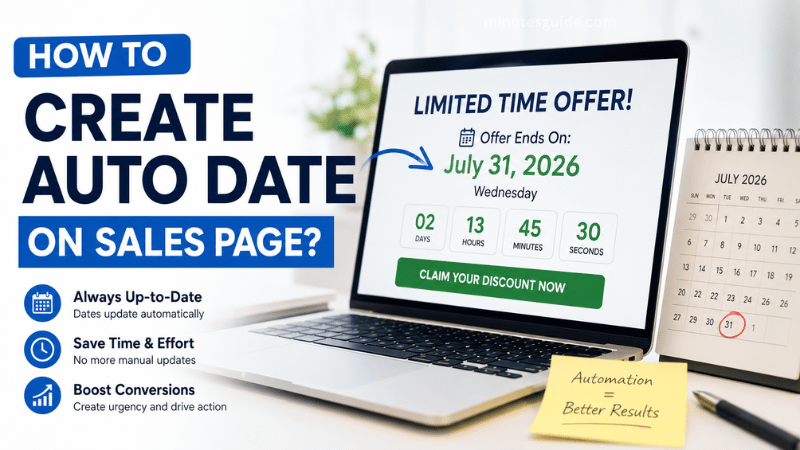
What Is an Auto Date on a Sales Page?
An auto date is a dynamically generated date that updates automatically without requiring manual editing.
Unlike a static date that becomes outdated over time, an automatic date continuously changes according to your chosen logic. The displayed value may represent today's date, tomorrow's date, a future deadline, or a custom date generated using specific rules.
For example, instead of writing:
"Special Discount Ends on July 31, 2026"
you could display:
"Special Discount Ends on [Automatically Generated Date]"
Every visitor will always see an updated deadline without you having to edit the page repeatedly.
Why Use Auto Dates on Sales Pages?
Automatic dates offer several advantages for website owners, affiliate marketers, and online businesses.
1. Keeps Your Sales Page Current
One of the biggest benefits is that your content never appears outdated. Visitors often lose confidence when they notice expired promotions or old dates on a sales page.
An automatically updated date helps maintain a professional appearance throughout the year.
2. Reduces Manual Maintenance
Updating dozens or even hundreds of landing pages can become time-consuming.
Auto dates eliminate repetitive editing tasks, allowing you to focus on improving your marketing strategy instead of performing routine updates.
3. Supports Evergreen Marketing Campaigns
Evergreen funnels are designed to generate sales continuously.
Dynamic dates fit perfectly into evergreen campaigns because they create fresh-looking deadlines without requiring frequent intervention.
4. Improves User Experience
Visitors appreciate seeing accurate and current information.
Displaying relevant dates makes your website appear more reliable and actively maintained.
5. Helps Increase Conversions
When used ethically, dynamic deadlines can encourage visitors to make purchasing decisions sooner rather than postponing them indefinitely.
However, these dates should always represent genuine promotional timelines and should never mislead potential customers.
When Should You Use Auto Dates?
Auto dates can be used in many situations beyond limited-time promotions.
Common examples include:
- Product launch announcements
- Webinar registration deadlines
- Early bird pricing
- Membership enrollment periods
- Software subscription offers
- Coupon expiration dates
- Course registration deadlines
- Seasonal promotions
- Holiday sales
- Event registration pages
Method 1: : Create Auto Date Using JavaScript
JavaScript is one of the easiest methods because it works directly in the visitor's browser.
The script automatically calculates and displays dates without requiring server-side programming.
A simple example is shown below.
This example displays a date:
From SOHO :Faiz Alias
Date:
RE: Put Your Title Here
You can modify the number of days to match your marketing campaign.
Method 2: : Creating Auto Date with PHP
If your website runs on PHP, generating automatic dates becomes even easier.
Example:
<?php
echo date("F j, Y", strtotime("+7 days"));
?>
This code automatically outputs a date seven days ahead of the current server date.
Because PHP runs on the server, visitors cannot manipulate the displayed value by changing their device clock.
Method 3: Using WordPress to Create Auto Dates
Many WordPress users prefer using plugins or shortcodes instead of writing custom code.
Several page builders and dynamic content plugins allow you to display automatically generated dates with little or no coding experience.
Examples include:
- Custom PHP snippets
- Dynamic shortcodes
- Gutenberg blocks
- Elementor dynamic tags
- Custom functions inside your theme
If you are comfortable editing your site's functions, you can also register your own shortcode that outputs a calculated future date.
Method 4: Creating an Evergreen Deadline
One popular strategy is showing a future date that is always a certain number of days ahead.
For example:
- Visitor arrives today
- Offer expires in 5 days
Tomorrow:
- New visitor arrives
- Offer expires in 5 days
This creates a rolling deadline suitable for evergreen sales funnels.
However, marketers should ensure these deadlines accurately reflect how their promotions operate to maintain transparency and customer trust.
Formatting Your Auto Date
Different regions prefer different date formats.
Examples include:
United States
July 31, 2026
United Kingdom
31 July 2026
ISO Format
2026-07-31
You can also include the weekday.
Example:
Wednesday, July 31, 2026
Displaying the weekday often makes the deadline appear clearer and more informative.
Displaying Countdown Dates Together
Many sales pages combine auto dates with countdown timers.
For example:
Offer Ends:
Wednesday, July 31, 2026
Time Remaining:
02 Days 13 Hours 45 Minutes
This combination gives visitors both the exact deadline and the remaining time.
Again, countdown timers should accurately reflect real promotional periods.
Best Places to Display Auto Dates
Strategic placement increases visibility without overwhelming the visitor.
Popular locations include:
- Hero section
- Pricing section
- Checkout button
- Bonus section
- Guarantee section
- FAQ section
- Footer reminder
- Sticky announcement bar
- Exit popup
Displaying the date multiple times helps reinforce the promotion while keeping the information easily accessible.
SEO Benefits of Using Auto Dates
Many website owners wonder whether dynamic dates help search engine optimization.
Although auto dates themselves are not a direct ranking factor, they provide several indirect SEO benefits.
1. Fresh-Looking Content
Visitors are less likely to encounter outdated promotions.
This can improve user confidence and reduce bounce rates.
2. Better User Experience
Current information creates a more professional browsing experience.
Satisfied users are more likely to stay longer and interact with your content.
3. Easier Content Maintenance
Dynamic dates eliminate the need for constant manual updates, allowing you to maintain a large collection of landing pages more efficiently.
4. Evergreen Content
Evergreen articles and sales pages remain relevant for longer periods because promotional dates continue updating automatically.
Common Mistakes to Avoid
Many beginners make avoidable errors when implementing automatic dates.
1. Using Expired Static Dates
Old promotional dates immediately reduce credibility.
Always automate recurring dates whenever possible.
2. Displaying Incorrect Time Zones
Ensure the displayed date matches your intended audience or server settings.
Incorrect time zones may confuse customers about the actual promotion deadline.
3. Overusing Fake Urgency
Artificial deadlines that reset indefinitely without explanation can damage trust.
Always ensure your promotions are truthful and transparent.
4. Forgetting Mobile Testing
Dynamic scripts should display correctly across smartphones, tablets, and desktop devices.
Always verify responsive behavior before publishing.
5. Ignoring Browser Compatibility
Test your implementation in multiple browsers to ensure consistent date formatting and functionality.
Tips for Creating Effective Auto Dates
Follow these recommendations to maximize both usability and credibility.
- Use readable date formats.
- Include weekdays where appropriate.
- Keep formatting consistent across your website.
- Match the displayed date with your promotion rules.
- Test different devices and browsers.
- Verify server time settings regularly.
- Combine dates with genuine promotional messaging.
- Avoid misleading countdowns.
- Review your implementation periodically.
Auto Date Ideas for Different Businesses
Different industries can benefit from automatic dates in various ways.
1. Online Courses
Display enrollment deadlines automatically.
Example:
Enrollment closes on August 10, 2026.
2. Software Products
Show upcoming pricing changes.
Example:
Current pricing available until August 10, 2026.
3. Affiliate Marketing
Highlight promotional periods for affiliate campaigns without manually updating every landing page.
4. Membership Websites
Automatically display registration windows for new members.
5. Ecommerce Stores
Show sale expiration dates during seasonal campaigns.
Auto Date vs Manual Date
| Feature | Auto Date | Manual Date |
|---|---|---|
| Updates Automatically | Yes | No |
| Requires Editing | No | Yes |
| Suitable for Evergreen Pages | Yes | Limited |
| Risk of Expired Information | Low | High |
| Saves Time | Yes | No |
| Maintenance Effort | Minimal | High |
The comparison clearly shows why many businesses prefer dynamic dates over manually entered deadlines, especially for evergreen marketing campaigns.
Conclusion
Learning how to create auto date functionality for a sales page is a valuable skill for anyone managing an online business, affiliate website, ecommerce store, or digital marketing campaign. Automatic dates help keep promotional content accurate, reduce ongoing maintenance, and support evergreen sales strategies by ensuring deadlines remain current without constant manual updates.
Whether you choose JavaScript, PHP, WordPress shortcodes, or a dedicated plugin, implementing dynamic dates is a straightforward improvement that can enhance both usability and operational efficiency. The key is to use automatic dates responsibly, ensuring that every displayed deadline reflects a genuine offer and maintains transparency with your audience. By following the methods and best practices outlined in this guide, you can build professional sales pages that remain relevant, trustworthy, and effective throughout the year.
Frequently Asked Questions About How to Create Auto Date
Is JavaScript or PHP better for auto dates?
JavaScript is simple to implement and works well for many front-end use cases. PHP is generally better when you want the server to control the displayed date, making it less dependent on the visitor's browser settings.
Can I create an auto date in WordPress without coding?
Yes. Many WordPress plugins, page builders, and dynamic content tools allow you to insert automatically generated dates without writing custom code.
Will an auto date improve SEO?
An auto date is not a direct search engine ranking factor. However, it can improve user experience, reduce outdated information, and support evergreen content strategies, which may contribute positively to overall website performance.
Can I display dates several days ahead?
Yes. Most JavaScript and PHP date functions allow you to add any number of days, weeks, or months based on your campaign requirements.
Should I use auto dates with countdown timers?
Yes, provided the countdown reflects a genuine promotional period. Combining an auto date with a countdown timer can improve clarity and help visitors understand when an offer expires.
References
- Can I add a date to a page automatically or manually? - facebook.com/groups/supernote
- How to automatically track create date for pages? - reddit.com