
Beginner's Guide to Hiking: Everything You Need to Know | Hiking is one of the most rewarding ways to spend time outdoors, explore natural landscapes, and develop a stronger appreciation for the environment. Unlike highly specialized outdoor activities, hiking can be enjoyed on relatively simple trails and does not necessarily require expensive equipment or advanced technical skills. However, even a short hike requires some preparation because trail conditions, weather, terrain, and personal fitness can vary considerably.
For anyone who is completely new to hiking, knowing where to begin can sometimes feel overwhelming. Questions about choosing a trail, selecting appropriate clothing, packing enough food and water, navigating unfamiliar terrain, and staying safe are all common concerns. The good news is that hiking becomes much easier to understand once you learn the fundamentals.
This beginner's guide to hiking explains the essential information you need before heading onto your first trail. From choosing the right hiking route and preparing your body to understanding basic hiking etiquette, packing essential equipment, and responding to unexpected situations, this guide will help you approach your first hiking experience with greater confidence and preparation.
Table of Contents
Beginner's Guide to Hiking: Everything You Need to Know
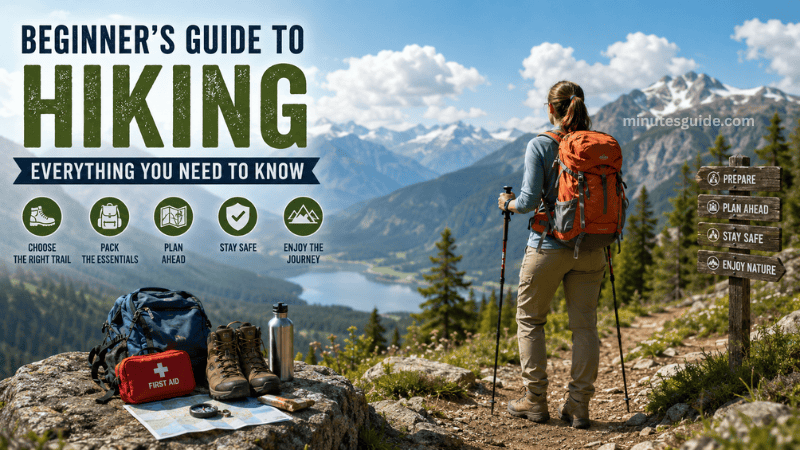
What Is Hiking?
Hiking is a recreational activity that involves walking through natural or semi-natural environments, usually along established trails. Hiking routes can range from short, relatively flat walks through parks to demanding mountain trails involving steep climbs, uneven terrain, and significant elevation changes.
One of the appealing aspects of hiking is its flexibility. A beginner can start with a short trail that takes less than an hour, while an experienced hiker may spend an entire day or several days traveling through remote areas. The activity can therefore be adapted to different experience levels, interests, and physical abilities.
Hiking can also provide an opportunity to experience forests, mountains, beaches, waterfalls, grasslands, and other natural environments. At the same time, it requires responsible preparation because outdoor conditions can change quickly and assistance may not always be immediately available.
The National Park Service recommends choosing trails according to your experience and abilities rather than overestimating what you can comfortably handle. (National Park Service)
Why Should Beginners Try Hiking?
Hiking offers several potential benefits beyond simply reaching a destination. Walking outdoors provides an opportunity to become physically active while enjoying changing scenery and spending time away from screens and indoor environments.
For beginners, hiking can also be an enjoyable way to gradually develop endurance and confidence. A person does not need to start with a difficult mountain trail. Beginning with an easy route allows you to learn how your body responds to walking, hills, heat, distance, and carrying a backpack.
Hiking may also encourage people to explore places they would otherwise never visit. A relatively simple trail can lead to viewpoints, forests, rivers, beaches, waterfalls, or other natural attractions.
Perhaps most importantly, hiking can become a lifelong outdoor hobby. Once you understand basic preparation and safety principles, you can gradually explore different types of trails and environments while developing your skills.
How to Choose Your First Hiking Trail
Choosing an appropriate first trail is one of the most important decisions a beginner can make. A trail that is too difficult may turn an enjoyable experience into an exhausting or potentially unsafe situation.
Start by looking for a trail that is clearly classified as easy or beginner-friendly. Pay attention to more than just the total distance because a short trail can still be challenging if it contains steep climbs, difficult terrain, exposed sections, or complicated navigation.
Consider Trail Distance
Distance is an important factor when choosing a hiking route. Beginners should avoid assuming that they can comfortably walk the same distance on a trail as they can on a paved road.
A three-kilometre trail with significant elevation gain can require considerably more effort than a three-kilometre walk through a flat park.
For a first hike, choose a distance that feels comfortably achievable rather than selecting a route simply because it looks impressive. Completing an easier hike successfully is generally more useful for building confidence than struggling through a trail that exceeds your current ability.
Check Elevation Gain
Elevation gain refers to the total amount of climbing involved during a route. It is one of the most important factors affecting hiking difficulty.
Two trails can have the same distance but feel completely different if one is relatively flat and the other involves repeated steep climbs.
Beginners should therefore check elevation information whenever it is available. If you are unfamiliar with hiking, a route with modest elevation gain is usually a better starting point than a steep mountain trail.
Research Trail Conditions
Before leaving, research the current condition of the trail. Look for information about closures, construction, flooding, fallen trees, extreme weather, or other hazards.
Official park or land-management websites can be particularly useful because trail conditions can change after heavy rainfall, storms, fires, or other environmental events. The National Park Service recommends checking current alerts, closures, weather conditions, and other local information before beginning a hike. (National Park Service)
Consider the Estimated Hiking Time
Do not assume that the estimated trail time represents how long it will take you personally. Beginners may walk more slowly than experienced hikers, particularly on steep or unfamiliar terrain.
Allow additional time for breaks, photographs, navigation, eating, and unexpected delays. It is also important to consider how much daylight remains if you are hiking outdoors.
What Should You Wear for Hiking?
The right clothing can make a significant difference in comfort and safety. Hiking clothing should generally allow you to move freely while helping you manage heat, moisture, rain, wind, and changing temperatures.
Choose Comfortable Hiking Footwear
Footwear should provide adequate grip and comfort for the terrain you intend to walk on. Closed-toe shoes with suitable traction are generally more appropriate than casual footwear such as sandals or flip-flops on uneven trails.
For simple, well-maintained trails, comfortable walking or trail shoes may be sufficient. More rugged terrain may require sturdier hiking footwear.
The most important consideration is not simply buying expensive hiking boots but choosing footwear that is appropriate for the trail and fits comfortably.
Wear Moisture-Management Clothing
Avoid relying solely on heavy cotton clothing during demanding or wet hikes because it can retain moisture and take a long time to dry.
Lightweight clothing designed to manage moisture can be more practical for active outdoor use. Depending on the climate, you may also want an additional layer that can be added or removed as conditions change.
Bring Rain Protection
Weather can change unexpectedly, especially in mountainous or exposed areas. Carrying a lightweight rain jacket or other suitable rain protection can help you remain comfortable if precipitation begins.
Do not rely entirely on the weather being perfect when you start your hike. A forecast can change, and local conditions may differ from what you experience at the trailhead.
What Hiking Gear Does a Beginner Need?
You do not need to purchase every piece of specialized hiking equipment before your first outing. For a simple day hike, focus on practical items that support navigation, hydration, protection, communication, and emergency preparedness.
The National Park Service recommends carrying the Ten Essentials, with the exact equipment adjusted according to the environment, duration, and difficulty of the activity. (National Park Service)
Basic Hiking Gear Checklist
| Item | Why You Need It |
|---|---|
| Comfortable hiking footwear | Provides support and traction |
| Backpack | Carries food, water, clothing, and essential equipment |
| Water | Helps maintain hydration |
| Food and snacks | Provides energy during the hike |
| Navigation tools | Helps you follow the correct route |
| Mobile phone | Useful for communication and navigation when service is available |
| First-aid kit | Helps manage minor injuries |
| Headlamp or flashlight | Provides illumination if the hike takes longer than expected |
| Rain jacket | Provides protection from changing weather |
| Sun protection | Helps protect against excessive sun exposure |
| Insect repellent | Useful in areas with mosquitoes and other insects |
| Emergency shelter | Provides additional protection during unexpected delays |
| Extra clothing | Helps manage changing temperatures and weather |
The exact contents of your backpack should be adjusted according to the location, duration, season, weather, and remoteness of the trail.
How Much Water Should You Bring Hiking?
Hydration is an important part of hiking preparation, particularly in hot or humid environments. However, there is no single amount of water that is appropriate for every hike because water requirements vary according to temperature, exertion, route length, individual needs, and availability of reliable water sources.
Research your route before leaving and determine whether there are dependable drinking-water facilities along the trail. Never assume that a stream, river, or other natural water source is automatically safe to drink.
If water must be collected from a natural source, use an appropriate treatment method according to local guidance. The National Park Service advises hikers to identify available water sources in advance and carry suitable water-treatment equipment when necessary. (National Park Service)
In hot weather, plan particularly carefully because hiking can increase fluid loss. Take regular drinking breaks and pay attention to how you feel rather than waiting until you are severely thirsty.
What Food Should You Bring Hiking?
Food provides energy for walking, climbing, and carrying a backpack. For a short hike, you may only need a few simple snacks, while longer outings require more substantial food planning.
Good hiking snacks are generally easy to carry, relatively durable, and convenient to eat without complicated preparation. Examples include fruit, nuts, sandwiches, crackers, granola-style snacks, or other foods that suit your dietary needs.
Bring more food than the absolute minimum when appropriate, particularly if you are traveling farther from assistance. Unexpected delays can extend the duration of a hike, so having additional food can be useful.
How Should Beginners Prepare Physically for Hiking?
You do not have to become an elite athlete before starting hiking. However, some basic preparation can make your first few hikes more comfortable.
Start with regular walking and gradually increase your distance. Walking on gentle hills can also help you become more comfortable with elevation changes.
You can gradually introduce longer walks as your confidence and endurance improve. The goal is not to push yourself as hard as possible but to develop the ability to complete your planned hikes comfortably.
Strengthening exercises that involve the legs and core can also complement regular walking, particularly if you eventually plan to tackle steeper trails.
Most importantly, recognize your current limits. The National Park Service specifically advises hikers to choose activities that match their abilities and to take breaks when necessary. (National Park Service)
Learn Basic Navigation Before Hiking
Navigation is an important skill even when you intend to use a smartphone. Mobile phones can be useful for maps and location information, but they should not be treated as your only navigation method.
Some trails have limited or nonexistent cellular coverage, and electronic devices can lose battery power. The National Park Service recommends carrying appropriate navigation tools and knowing how to use them rather than depending entirely on a phone. (National Park Service)
For beginners, learn how to:
- Read a basic trail map.
- Identify trail markers.
- Understand the direction of your route.
- Recognize major landmarks.
- Check your position periodically.
- Use a downloaded offline map when appropriate.
- Carry a physical map as a backup on less familiar routes.
You should also know where the trail begins and ends before setting out. If the route contains multiple junctions, study them in advance so that you understand where you need to turn.
Check the Weather Before Hiking
Weather is one of the most important factors to consider before hiking. A trail that is comfortable in dry weather can become significantly more difficult during heavy rain, strong winds, extreme heat, or storms.
Check the forecast shortly before departure and look for warnings that could affect the area. Remember that mountain and forest environments can experience different conditions from nearby towns.
If conditions are unsuitable, postponing the hike is a sensible decision rather than treating the original schedule as something that must be followed. The National Park Service recommends having a backup plan when weather or other conditions make the original hiking plan unsuitable. (National Park Service)
Tell Someone About Your Hiking Plans
Before heading into an unfamiliar or remote area, tell a trusted person where you are going and when you expect to return.
Provide useful information such as the trail name, starting point, expected route, approximate return time, and the people accompanying you.
This simple precaution can become extremely important if an unexpected problem occurs. The National Park Service recommends leaving a trip plan with someone who is not participating in the hike, particularly for more remote outings. (National Park Service)
If your plans change significantly, communicate the change when practical.
Should Beginners Hike Alone?
For a first hiking experience, going with a responsible companion or group can provide additional support. Having another person with you can be especially useful if you become tired, injured, confused about the route, or affected by unexpected conditions.
If you do hike alone, careful planning becomes even more important. Choose a trail appropriate for your experience, tell someone your itinerary, carry appropriate safety equipment, and understand the limitations of mobile-phone coverage.
Beginners should generally prioritize well-established trails and avoid unnecessarily remote or technically difficult routes until they have developed greater outdoor experience.
Important Hiking Safety Tips for Beginners
Safety should be part of your hiking plan from the beginning rather than something considered only after an emergency occurs.
Stay on Established Trails
Whenever possible, remain on designated trails. Leaving established routes can increase the risk of becoming lost and can also damage vegetation and soil.
Following marked trails also makes it easier for other people and emergency responders to understand your location if assistance becomes necessary.
Do Not Ignore Signs of Exhaustion
Hiking should not become a competition. If you are becoming unusually tired, overheated, dizzy, or otherwise unwell, stop and assess the situation.
Take a break, drink water, and consider whether continuing is appropriate. Turning around is not a failure. It is often the correct decision when conditions or your physical state indicate that completing the route may not be safe.
Be Careful Around Water
Waterfalls, rivers, streams, and wet rocks can create serious hazards. Wet surfaces may be slippery, while rapidly moving water can be much stronger than it appears.
Avoid taking unnecessary risks around waterfalls, steep riverbanks, or fast-moving water. The National Park Service specifically warns hikers about slippery areas, waterfalls, rapid water, and unsafe stream crossings. (National Park Service)
Be Aware of Wildlife
Wildlife encounters can be an exciting part of hiking, but animals should be observed from a safe distance.
Never attempt to approach, touch, feed, or provoke wild animals. Learn about the wildlife that may be present in the area before hiking and follow local instructions regarding food storage and animal encounters.
Protect Yourself From Insects and Sun Exposure
Depending on the location, mosquitoes, ticks, and other insects can be a concern. Appropriate clothing and insect repellent may help reduce exposure.
Sun protection is also important, particularly on exposed trails. Sunglasses, appropriate clothing, a hat, and sunscreen can help reduce excessive sun exposure. These measures are included among the National Park Service's recommended hiking essentials. (National Park Service)
What Are the Ten Essentials for Hiking?
The Ten Essentials are a widely used framework for preparing for unexpected situations outdoors. They are better understood as categories of essential equipment rather than a rigid shopping list.
The commonly recognized categories include:
- Navigation
- Sun protection
- Extra clothing and insulation
- Illumination
- First-aid supplies
- Fire-starting equipment
- Repair kit and tools
- Food
- Hydration
- Emergency shelter
The specific equipment required will depend on the location and type of hike. For example, a short urban trail may require considerably less specialized equipment than a remote backcountry route. (National Park Service)
Understand Hiking Etiquette
Good hiking etiquette helps create a better experience for everyone using the trail.
Stay aware of other hikers and give people enough space to pass safely. On many trails, hikers traveling uphill are generally given priority, although local trail rules may differ.
Keep noise at a reasonable level, avoid disturbing wildlife, and do not leave rubbish behind.
If you are hiking with a group, avoid allowing the group to become excessively spread out. The National Park Service recommends keeping groups together and allowing the slower members to establish the group's pace. (National Park Service)
Practice Leave No Trace Principles
Hiking responsibly means protecting the environment you came to enjoy.
The Leave No Trace organization promotes seven principles designed to reduce outdoor impacts. These include planning ahead, traveling on durable surfaces, disposing of waste properly, and leaving natural objects where they are. (Leave No Trace)
For beginners, some simple habits make a major difference:
- Carry all rubbish out with you.
- Do not leave food waste on the trail.
- Stay on designated paths.
- Avoid damaging plants.
- Do not take rocks, plants, or other natural objects as souvenirs.
- Respect wildlife.
- Follow local regulations.
- Keep natural areas clean for future visitors.
A beautiful hiking environment exists partly because previous visitors treated it responsibly. Every hiker therefore has a role in protecting trails and natural areas.
Common Mistakes Beginners Should Avoid
Learning from common mistakes can make your first hiking experiences considerably easier.
Choosing a Trail That Is Too Difficult
One of the most common mistakes is selecting a route based solely on photographs or its popularity.
A beautiful mountain viewpoint may require significantly more effort than expected. Always examine distance, elevation gain, terrain, estimated duration, weather, and your own experience before choosing a trail.
Wearing Unsuitable Shoes
Casual shoes may be uncomfortable or unsafe on uneven, muddy, wet, or rocky terrain.
Choose footwear according to the trail conditions rather than simply choosing what looks fashionable.
Carrying Too Much Equipment
Beginners sometimes believe that more equipment automatically means greater safety. In reality, an unnecessarily heavy backpack can make a hike more tiring.
Focus on carrying appropriate essentials and learn how to pack efficiently as your experience increases.
Relying Entirely on a Smartphone
A smartphone is useful, but it should not be your only plan for navigation or emergency communication. Cellular coverage may be unavailable, batteries can run out, and electronic devices can fail.
Download relevant maps before departure and consider carrying backup navigation equipment for unfamiliar or remote routes.
Ignoring Weather Conditions
Starting a hike during questionable weather because you have already made plans can lead to unnecessary problems.
Check conditions before leaving and be prepared to postpone or modify the hike when necessary.
A Simple First-Hike Checklist
Before leaving home, use the following checklist:
| Category | What to Check |
|---|---|
| Trail | Distance, elevation, difficulty, terrain |
| Weather | Forecast, temperature, rain, storms |
| Route | Trail map and major junctions |
| Clothing | Comfortable footwear and suitable layers |
| Water | Sufficient supply and available water sources |
| Food | Snacks or meals appropriate for the duration |
| Safety | First-aid kit and emergency equipment |
| Navigation | Map, offline map, compass or GPS |
| Communication | Fully charged phone and emergency contact |
| Protection | Sunscreen, hat, insect protection, rain gear |
| Timing | Start time, estimated duration, turnaround time |
| Emergency plan | Person informed of your itinerary |
Going through this list before every hike can gradually become a routine.
How to Make Your First Hiking Experience More Enjoyable
Your first hike does not need to be an extreme adventure. In fact, choosing an enjoyable and manageable route is one of the best ways to develop a lasting interest in hiking.
Start early enough to avoid rushing, particularly if the trail has a fixed closing time or limited daylight. Walk at a comfortable pace rather than trying to keep up with more experienced hikers.
Take breaks when necessary and give yourself time to enjoy the scenery. Hiking is not simply about reaching the endpoint as quickly as possible.
You can also use your first few hikes as opportunities to learn. Pay attention to how much water and food you actually use, how your footwear performs, how your backpack feels, and how long the trail takes you.
With each outing, you can adjust your preparation based on what you learned.
How to Progress From Beginner to More Experienced Hiker
Once you are comfortable with easy trails, you can gradually increase the difficulty of your hikes.
Instead of making a dramatic jump from a short beginner trail to a difficult mountain route, increase one variable at a time. You might first increase distance, then introduce more elevation, and eventually explore more challenging terrain.
You can also learn additional skills such as map reading, compass navigation, basic first aid, weather awareness, and outdoor emergency planning.
Over time, you may become interested in longer day hikes, multi-day hiking, backpacking, or other outdoor activities. Each step should be approached gradually, with appropriate preparation for the environment and conditions.
Final Thoughts
This beginner's guide to hiking provides the foundation you need to start exploring trails with greater confidence. Hiking does not require you to be an expert athlete or own a large collection of expensive outdoor equipment. What matters most is choosing an appropriate trail, preparing for the conditions, carrying essential supplies, understanding your limitations, and making responsible decisions throughout the journey.
For your first hike, focus on keeping things simple. Select a manageable route, check the weather, wear comfortable footwear, bring sufficient water and food, carry basic safety equipment, and tell someone where you are going.
As your experience grows, you can gradually explore longer and more challenging trails. The most important lesson is to respect the environment, respect your own limits, and never allow the desire to complete a route to override sensible safety decisions.
With thoughtful preparation and a willingness to learn, hiking can become a rewarding way to explore nature, stay active, and discover new places. Whether your goal is a peaceful walk through a forest or eventually reaching a mountain summit, every experienced hiker started somewhere. A well-planned beginner's hike is the first step toward many future outdoor adventures.
Frequently Asked Questions About Hiking for Beginners
What is the best way to start hiking as a beginner?
The best way to start hiking is to choose a short, well-maintained trail with an easy difficulty level. Research the distance, elevation gain, weather conditions, and trail surface before starting. Bring enough water, some food, suitable footwear, basic navigation equipment, and essential safety supplies.
How long should a beginner hike?
A beginner can start with a hike lasting approximately one to two hours, depending on fitness, terrain, weather, and trail difficulty. It is better to choose a manageable route and finish comfortably than to attempt a trail that is too long or demanding.
What should I bring on my first hike?
Essential items include water, food or snacks, a comfortable backpack, suitable footwear, navigation tools, a mobile phone, a basic first-aid kit, sun protection, rain protection, and extra clothing when appropriate. The equipment should be adjusted according to the trail, weather, distance, and remoteness.
What should I wear for hiking?
Wear comfortable clothing that allows unrestricted movement and is suitable for the weather. Comfortable footwear with appropriate traction is particularly important. Depending on the conditions, you may also need lightweight layers, a rain jacket, sun protection, and insect protection.
How much water should I bring when hiking?
The amount of water required depends on factors such as the length of the hike, temperature, humidity, elevation, level of physical effort, and availability of reliable water sources. Research the trail beforehand and carry enough water for the planned hike, with additional consideration for unexpected delays.
Is hiking difficult for beginners?
Hiking difficulty varies considerably from one trail to another. Some trails are suitable for beginners, while others involve steep climbs, uneven surfaces, long distances, or challenging weather conditions. Beginners should start with easier trails and gradually increase the difficulty as their experience improves.
Should I hike alone as a beginner?
Beginners may benefit from hiking with a responsible companion or group, particularly when exploring unfamiliar areas. If you hike alone, careful preparation is especially important. Choose a suitable trail, tell someone about your plans, carry appropriate safety equipment, and understand the limitations of mobile-phone coverage.
How can I prepare physically for hiking?
Regular walking is one of the simplest ways to prepare for hiking. Begin with comfortable distances and gradually increase the duration and difficulty of your walks. Walking on gentle hills and incorporating appropriate strength exercises can also help you become more comfortable with longer or steeper hikes.
What should I do if I become tired during a hike?
Stop and take a break if you become excessively tired. Drink water, eat if appropriate, and assess whether you can safely continue. If you are feeling unwell or conditions are becoming unsafe, turning around or ending the hike is a sensible decision.
Do I need a map when hiking?
A map is highly recommended, particularly when hiking on unfamiliar or remote trails. A smartphone with an offline map can be useful, but it should not necessarily be your only navigation method because mobile coverage and battery power may be limited.
What are the Ten Essentials for hiking?
The Ten Essentials are a framework for carrying equipment that can help hikers deal with unexpected situations. They generally include navigation, sun protection, extra clothing, illumination, first-aid supplies, fire-starting equipment, repair tools, food, hydration, and emergency shelter.
What should I do if the weather changes while hiking?
If weather conditions become dangerous, prioritize safety rather than continuing with your original plan. Seek appropriate shelter when necessary, monitor conditions, and consider turning back or ending the hike. Checking the weather forecast before departure and carrying suitable rain and protective clothing can help you prepare for changes.
What are the most common mistakes beginners make when hiking?
Common mistakes include choosing a trail that is too difficult, wearing unsuitable footwear, carrying insufficient water, relying entirely on a smartphone for navigation, ignoring weather conditions, starting too late, and failing to tell someone about the hiking plans. Proper preparation can prevent many of these problems.
How can beginners hike safely?
Beginners can improve hiking safety by choosing an appropriate trail, checking the weather, carrying essential equipment, staying on designated trails, managing their pace, remaining aware of their surroundings, and knowing when to turn back. It is also advisable to tell someone where you are going and when you expect to return.
How can I become a better hiker?
The best way to improve is to gain experience gradually. Start with easy trails and progressively increase distance, elevation, and terrain difficulty. Learn useful skills such as navigation, first aid, weather awareness, and outdoor safety while paying attention to what you learn from each hiking trip.
References
- Hiking for Beginners: Getting Started - rei.com
- Lets Start Hiking – 10 tips for beginners - australianhiker.com.au