
Backpacking Tips For Beginners | Backpacking is one of the most rewarding ways to explore the outdoors, experience new destinations, and develop greater confidence in unfamiliar environments. Unlike a conventional holiday where most transportation, accommodation, and activities are planned in advance, backpacking gives travelers greater independence and flexibility. You carry most of what you need with you, travel between different locations, and make decisions based on your budget, interests, physical ability, and the conditions around you.
For beginners, however, the freedom associated with backpacking can also make the first trip feel overwhelming. Choosing a destination, preparing a backpack, planning transportation, managing money, understanding weather conditions, and knowing what to do in an emergency are all important considerations. Carrying too much equipment or failing to prepare for changing conditions can quickly turn an enjoyable adventure into an uncomfortable experience.
The good news is that backpacking does not require you to be an experienced outdoor enthusiast. With sensible preparation, appropriate equipment, realistic expectations, and a willingness to learn, almost anyone can begin backpacking safely and confidently.
This guide provides practical backpacking tips for beginners to help you prepare for your first adventure, avoid common mistakes, manage your equipment, and enjoy the journey more comfortably.
Table of Contents
Backpacking Tips For Beginners
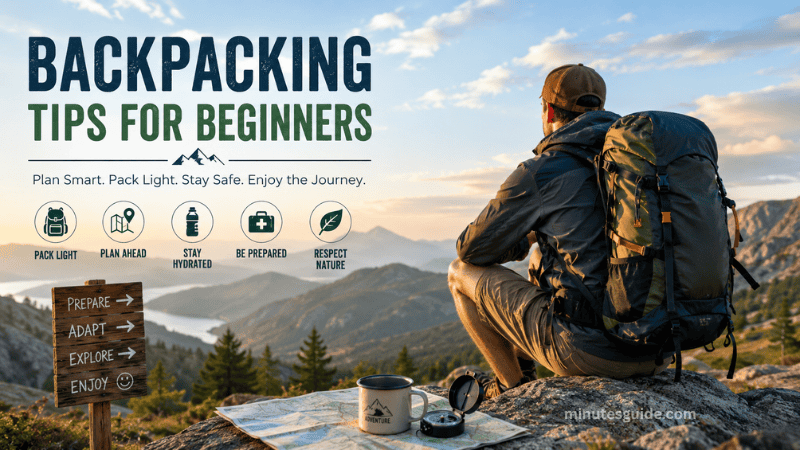
What Is Backpacking?
Backpacking generally refers to traveling while carrying your essential belongings in a backpack, often involving multiple destinations, overnight stays, hiking, camping, or budget-oriented travel. The exact meaning can vary depending on the type of trip.
Some backpackers travel through cities and countries while staying in hostels, guesthouses, or inexpensive hotels. Others combine long-distance hiking with camping in remote natural areas. There are also trips that combine both approaches, such as traveling through a region using public transportation while spending several nights hiking and camping along the way.
Regardless of the style, backpacking is based on the principle of traveling with limited possessions. Because everything you bring must eventually be carried, transported, or organized, careful preparation becomes especially important.
Start With a Simple Backpacking Trip
One of the most important backpacking tips for beginners is to avoid making your first trip unnecessarily complicated. Many beginners become excited about backpacking and immediately plan long journeys involving multiple countries, difficult hiking routes, unpredictable weather, and numerous transportation connections.
A simpler trip gives you an opportunity to understand how your equipment works and discover how much you actually need to carry. Consider starting with a short trip lasting one or two nights rather than immediately committing to a week-long expedition.
If you are planning a hiking and camping trip, choose a relatively accessible trail with clearly marked routes, reliable water sources, and reasonable access to emergency services. If you are traveling between cities, select destinations with straightforward transportation and accommodation options.
Your first backpacking trip should be treated as a learning experience rather than a test of endurance.
Choose the Right Destination
Destination selection can have a major impact on your first backpacking experience. Beginners should consider more than simply choosing a place that looks beautiful in photographs.
Research the terrain, weather, transportation options, accommodation, local regulations, safety conditions, available food, water sources, and communication coverage before leaving.
For hiking-based backpacking, determine whether the route is suitable for your current fitness level. A trail described as moderate by an experienced hiker may feel extremely difficult to someone who rarely walks long distances with a loaded backpack.
For international backpacking, research visa requirements, passport validity, local laws, transportation systems, travel insurance requirements, currency, cultural expectations, and emergency contact information.
The best beginner destination is not necessarily the most famous or adventurous location. It is a destination that matches your experience, physical ability, budget, and comfort level.
Plan Your Route Carefully
A basic route plan helps you understand where you will sleep, eat, refill water, obtain supplies, and travel between locations.
Before starting, identify important points along your route and estimate the distance between them. For hiking trips, consider elevation gain, terrain difficulty, expected walking time, and possible alternative routes.
Avoid creating a schedule that requires you to move constantly from one destination to another. Leaving some flexibility in your itinerary can make the trip more enjoyable and provides additional time to deal with unexpected delays.
You should also have a backup plan. Weather, transportation delays, trail closures, illness, injuries, and other unexpected circumstances can force you to change your original plans.
Learn How to Pack Light
One of the most valuable backpacking tips for beginners is to pack less.
Many first-time backpackers make the mistake of packing for every possible situation. The result is often a heavy backpack filled with items that are rarely used.
Before placing something in your backpack, consider whether you genuinely need it. If an item is useful but can easily be purchased at your destination, you may not need to carry it from home.
Choose clothing that can be used for multiple purposes and prioritize lightweight, durable items. Avoid bringing unnecessary duplicates, especially when it comes to shoes, jackets, toiletries, and electronic accessories.
A lighter backpack reduces physical strain and makes walking, climbing stairs, using public transportation, and moving between accommodations considerably easier.
Choose a Suitable Backpack
Your backpack is one of the most important pieces of equipment you will use, so choosing an appropriate model is essential.
A good backpack should fit your body properly, distribute weight comfortably, and provide enough capacity for your trip without encouraging you to overpack. Hiking backpacks commonly include adjustable shoulder straps, a hip belt, ventilation features, multiple compartments, and support structures.
Do not choose a backpack solely because it has the largest capacity. A huge backpack can encourage unnecessary packing and may become extremely heavy when fully loaded.
For short trips, a smaller backpack may be sufficient. Longer trips or camping adventures may require more capacity because you need to carry additional food, shelter, cooking equipment, and other supplies.
Always test the backpack with weight inside before your trip. Walk around your home or neighborhood for an extended period and pay attention to pressure points, shoulder discomfort, hip belt positioning, and overall balance.
Organize Your Backpack Properly
How you organize your backpack can be almost as important as what you put inside it.
Items that you need frequently should be placed somewhere easily accessible. Examples include snacks, water, rain protection, navigation equipment, sunscreen, and a small first-aid kit.
Less frequently used equipment can be placed deeper inside the backpack. During a camping trip, sleeping equipment may remain packed until you reach your campsite, while emergency equipment should remain accessible in case it is needed unexpectedly.
Use small waterproof bags or packing cubes to organize clothing, electronics, toiletries, and other categories of equipment. This prevents your backpack from becoming disorganized and makes it easier to find specific items.
When hiking, heavier items should generally be positioned close to your back and packed in a way that maintains good balance. Avoid placing heavy objects at the extreme bottom or far away from your body because this can affect stability and comfort.
Wear Appropriate Clothing
Clothing selection is another important consideration for beginners.
Instead of focusing on fashion, prioritize comfort, weather protection, breathability, durability, and the ability to dry quickly. Your clothing should be appropriate for the climate and activities you expect to encounter.
For hiking, moisture-wicking shirts, comfortable hiking trousers or shorts, suitable socks, and a lightweight outer layer can be useful. In wet conditions, reliable rain protection becomes particularly important.
Avoid relying entirely on cotton during activities where you expect significant sweating or exposure to cold and wet conditions. Cotton can retain moisture and take a long time to dry.
A layering system is often more practical than wearing one very thick item. Layers allow you to adjust your clothing as temperature, wind, and activity levels change.
Invest in Comfortable Footwear
Your feet carry you throughout the entire journey, making footwear one of the most important considerations for backpacking.
Choose footwear appropriate for the terrain and activity. Some trips may be suitable for lightweight hiking shoes, while rougher terrain may require more supportive hiking boots.
Never assume that expensive footwear will automatically be comfortable. Fit is more important than price or brand.
Wear your footwear before the trip and gradually increase the distance you walk in it. New shoes or boots can cause painful blisters when used for long distances without being properly broken in.
Also pay attention to your socks. Moisture management and proper fit can help reduce friction and discomfort during long walking sessions.
Bring Essential Navigation Tools
Getting lost is one of the most serious problems that can occur during an outdoor backpacking trip.
Before starting a route, study the map and understand the general direction of travel. Do not rely exclusively on your smartphone because batteries can run out, devices can become damaged, and cellular coverage may disappear in remote locations.
Depending on your destination, consider carrying a physical map and compass as backup navigation tools. Learn the basic principles of using them before your trip rather than carrying them without knowing how they work.
Offline maps can also be extremely useful because they allow you to navigate without an active internet connection.
Carry Enough Food and Water
Food and water requirements depend on the duration, intensity, climate, and location of your trip.
For hiking, bring sufficient water for the distance you expect to travel, while also understanding where reliable water sources are available. If you intend to collect water from natural sources, research whether treatment or filtration is necessary.
Water should never be assumed to be safe simply because it looks clean. Contaminated water can cause serious gastrointestinal illness.
Bring convenient, energy-dense foods that are easy to carry and consume. Nuts, dried fruit, energy bars, sandwiches, crackers, and other lightweight foods can be useful depending on the trip.
For longer journeys, plan your meals in advance so you know approximately how much food is required without carrying excessive amounts.
Check the Weather Before Leaving
Weather can change rapidly, particularly in mountainous, coastal, or forested environments.
Check the weather forecast before starting your trip and understand how conditions may affect your route. Heavy rain can make trails slippery and cause streams or rivers to rise. Strong winds can create dangerous conditions, while extreme heat can increase dehydration and exhaustion.
Do not treat a weather forecast as a guarantee. Conditions can change after you begin your journey, so remain alert to changes in clouds, wind, temperature, and visibility.
If conditions become unsafe, changing your plans is a responsible decision rather than a failure.
Prepare for Emergencies
Every backpacker should have a basic emergency plan.
Carry a small first-aid kit appropriate for the activities you are undertaking. It can include items such as adhesive bandages, antiseptic supplies, blister treatment, medical tape, and other basic necessities.
For remote trips, additional equipment may be appropriate depending on the environment and level of risk.
Make sure someone you trust knows your itinerary, destination, expected return time, and how to contact you. For more remote journeys, provide updates when practical.
You should also know the local emergency procedures and understand how to obtain help if you become injured, lost, or stranded.
Protect Your Valuables
When backpacking, you may frequently move between accommodations, buses, trains, airports, restaurants, and outdoor locations. Keeping important belongings secure should therefore be part of your routine.
Keep your passport, identification documents, money, payment cards, phone, and other important items in secure locations. Avoid keeping everything together in a single place because losing one bag could otherwise mean losing all your important possessions.
For international travel, keep digital copies of important documents in a secure location that you can access if the originals are lost.
Do not display large amounts of cash or expensive equipment unnecessarily, particularly in crowded areas.
Manage Your Backpacking Budget
Budget management is another essential part of successful backpacking.
Before leaving, estimate your expected expenses for transportation, accommodation, food, activities, entrance fees, travel insurance, equipment, and emergencies.
It is better to prepare a realistic budget with an emergency reserve than to calculate your expenses down to the final dollar.
Unexpected costs are common during travel. A missed bus, replacement equipment, medical expense, accommodation change, or last-minute transportation requirement can quickly increase your spending.
Tracking your expenses during the trip can also help you identify where your money is going and prevent unnecessary overspending.
Do Not Ignore Travel Insurance
Travel insurance can provide valuable protection, particularly for international trips or activities involving significant physical risk.
Depending on the policy, coverage may include medical expenses, trip cancellation, lost baggage, travel delays, or emergency assistance.
Read the policy carefully rather than assuming every activity is automatically covered. Certain adventure activities, high-risk sports, remote travel, or pre-existing circumstances may have specific exclusions or conditions.
The cheapest policy is not necessarily the best option. Focus on whether the coverage is appropriate for your destination and planned activities.
Respect Local Laws and the Environment
Responsible backpacking involves respecting the places you visit.
Follow local regulations, remain on permitted trails, respect private property, and observe restrictions relating to camping, fires, wildlife, and waste disposal.
When hiking or camping, follow Leave No Trace principles where applicable. Carry your rubbish with you, avoid damaging vegetation, do not disturb wildlife, and leave natural environments as you found them.
If you are traveling internationally, remember that laws and social customs can differ significantly between countries. Research local expectations before arriving and behave respectfully toward residents, communities, and other travelers.
Learn Basic Outdoor Skills
You do not need to become an expert before your first backpacking trip, but learning a few basic skills can significantly improve your confidence.
Useful skills include reading a map, using a compass, checking weather conditions, managing hydration, treating minor injuries, setting up a tent, preparing simple meals, and maintaining basic personal safety.
If you are planning to camp, practice setting up your tent at home before your trip. Trying to understand unfamiliar equipment for the first time in darkness or heavy rain can be frustrating.
Similarly, test your cooking equipment, water filtration system, backpack, and other essential gear before relying on them during your trip.
Train Before Your Backpacking Trip
Physical preparation is particularly important for hiking-based backpacking.
You do not necessarily need an intensive training program, but you should gradually improve your endurance and strength before carrying a loaded backpack over long distances.
Start by walking regularly and gradually increase the distance. Once you are comfortable, add a backpack with a modest amount of weight.
Strengthening your legs, hips, back, and core can also help you handle uneven terrain and prolonged walking more comfortably.
Most importantly, do not increase distance, weight, and difficulty too quickly. Gradual preparation gives your body time to adapt.
Avoid Overplanning Every Moment
Planning is important, but excessive planning can remove much of the flexibility that makes backpacking enjoyable.
Leave room in your schedule for unexpected discoveries, rest, changes in weather, delays, and opportunities to explore places that were not part of your original itinerary.
A flexible itinerary also reduces stress. If you miss a bus or decide to spend an additional day in a particular location, you can adjust your plans without completely disrupting the trip.
The goal is to have enough preparation to remain safe while retaining enough flexibility to enjoy the experience.
Learn From Your First Trip
Your first backpacking trip will teach you things that no online guide can completely explain.
You may discover that certain items were unnecessary, while something you considered unimportant turns out to be extremely useful. You may also discover that your backpack is too large, your footwear needs improvement, or your daily walking distance was unrealistic.
After returning home, review your experience.
Consider what worked well, what caused problems, what you did not use, and what you wish you had brought. Write these observations down while the experience is still fresh.
This process will make each future backpacking trip more efficient and comfortable.
Common Backpacking Mistakes Beginners Should Avoid
Beginners often make similar mistakes during their first trips. Understanding these problems in advance can help you avoid unnecessary difficulties.
| Common Mistake | Why It Can Be a Problem | Better Approach |
|---|---|---|
| Packing too much | Creates unnecessary weight and discomfort | Pack only essential and versatile items |
| Choosing a difficult route | Can lead to exhaustion or injury | Select a route that matches your experience |
| Wearing new hiking shoes | Can cause blisters and foot pain | Break footwear in before the trip |
| Ignoring the weather | Can expose you to dangerous conditions | Check forecasts and prepare for changes |
| Relying only on a phone | Battery or signal failure can leave you without navigation | Carry backup navigation tools |
| Carrying insufficient water | Can result in dehydration | Plan water requirements carefully |
| Having no emergency plan | Makes unexpected situations harder to manage | Share your itinerary and carry essential safety equipment |
| Spending without a budget | Can cause financial problems during the trip | Establish a realistic budget and emergency reserve |
| Overplanning | Leaves little room for unexpected changes | Keep your itinerary flexible |
| Ignoring physical preparation | Makes long walks more difficult | Train gradually before departure |
Final Backpacking Tips for Beginners
The best backpacking tips for beginners are often based on simple principles: start small, pack carefully, understand your destination, prepare for changing conditions, and know your personal limits.
You do not need the most expensive equipment or the most ambitious itinerary to have a successful backpacking experience. Good preparation is generally more valuable than expensive gear.
Choose a destination that matches your current abilities, practice using your equipment before departure, carry only what you genuinely need, and maintain a sensible emergency plan. Pay attention to weather conditions, stay hydrated, protect your valuables, and respect the environment and local communities.
Most importantly, remember that backpacking is a skill that develops through experience. Your first trip does not need to be perfect. Every journey provides an opportunity to learn how to pack more efficiently, plan more effectively, travel more responsibly, and become more confident.
With the right preparation and a realistic approach, backpacking can become an enjoyable way to explore new places while developing independence, resilience, and a deeper appreciation for the world around you.
Frequently Asked Questions About Backpacking for Beginners
What is backpacking for beginners?
Backpacking for beginners is a form of independent travel or outdoor adventure where you carry your essential belongings in a backpack while traveling between destinations, hiking, camping, or staying in budget accommodation. Beginners should start with simple and manageable trips before attempting longer or more challenging journeys.
How should a beginner prepare for backpacking?
A beginner should start by choosing a suitable destination, researching the route and weather, preparing essential equipment, planning food and water, checking transportation and accommodation, and creating an emergency plan. It is also useful to practice using your backpack and equipment before the actual trip.
How much should a beginner pack for a backpacking trip?
A beginner should pack only the items that are genuinely necessary for the planned trip. Essential items usually include appropriate clothing, footwear, food, water, navigation tools, personal hygiene products, emergency supplies, and any required camping equipment. Keeping the backpack lightweight can make the journey considerably more comfortable.
What size backpack is best for beginners?
The ideal backpack size depends on the length and type of trip. A smaller backpack may be sufficient for a short trip, while longer camping journeys require additional capacity for food, shelter, clothing, and other equipment. Beginners should avoid choosing an unnecessarily large backpack because extra space can encourage overpacking.
What should I wear when backpacking?
You should wear comfortable clothing that matches the weather and terrain. Breathable and moisture-wicking clothing, comfortable socks, suitable hiking footwear, and a lightweight waterproof layer are useful for many outdoor trips. Dressing in layers can also make it easier to adapt to changing temperatures.
What food should beginners bring backpacking?
Beginners should choose lightweight, convenient, and energy-dense foods that are easy to carry and prepare. Depending on the trip, suitable options may include nuts, dried fruit, energy bars, sandwiches, crackers, dehydrated meals, and other foods that provide sufficient calories without adding excessive weight to the backpack.
How much water should I carry when backpacking?
The amount of water required depends on factors such as temperature, physical activity, route length, and access to reliable water sources. Beginners should research available water sources before leaving and carry sufficient water for sections where no safe supply is available. Water collected from natural sources may need to be filtered or treated before drinking.
Is backpacking difficult for beginners?
Backpacking does not have to be difficult if the first trip is planned according to your experience and physical ability. Beginners should start with short distances, relatively simple routes, and manageable overnight trips. Difficulty can be increased gradually as you gain experience and confidence.
Do I need to be physically fit before backpacking?
A basic level of physical fitness is helpful, particularly for hiking and camping trips that involve carrying a loaded backpack over long distances. Beginners can prepare by walking regularly and gradually increasing their distance while carrying a modest amount of weight. Strengthening the legs and core can also improve endurance and stability.
What should I do if the weather becomes dangerous while backpacking?
If weather conditions become unsafe, prioritize your safety rather than continuing according to your original itinerary. Depending on the circumstances, you may need to turn back, seek shelter, postpone the journey, or use an alternative route. Checking weather forecasts before and during the trip can help you make better decisions.
Should beginners use a map and compass when backpacking?
Yes. Even when using a smartphone or GPS device, carrying a physical map and compass can provide an important backup if your electronic device loses power, becomes damaged, or loses signal. Beginners should learn basic navigation skills before undertaking a remote backpacking trip.
Is travel insurance necessary for backpacking?
Travel insurance can be valuable, particularly for international backpacking trips or activities involving greater physical or financial risks. Depending on the policy, it may provide coverage for medical expenses, trip cancellations, travel delays, lost baggage, and emergency assistance. Always check the policy terms and exclusions to ensure that it covers your destination and planned activities.
What are the most common backpacking mistakes beginners make?
Common mistakes include packing too much, choosing a route that is too difficult, wearing new footwear, ignoring weather conditions, carrying insufficient water, relying entirely on a smartphone for navigation, failing to prepare for emergencies, and not having a realistic budget. Starting with a simple trip and preparing carefully can help prevent many of these problems.
How can I make my first backpacking trip more enjoyable?
Choose a destination that matches your abilities, keep your backpack lightweight, wear comfortable footwear, plan your route carefully, and leave some flexibility in your itinerary. Most importantly, avoid putting unnecessary pressure on yourself to complete an ambitious itinerary. Your first backpacking trip should be an opportunity to learn and enjoy the experience.
References
- Backpacking Tips for Beginners: Getting Started - rei.com
- Backpacking 101 for Beginners: How to Plan Your First Trip - bearfoottheory.com