
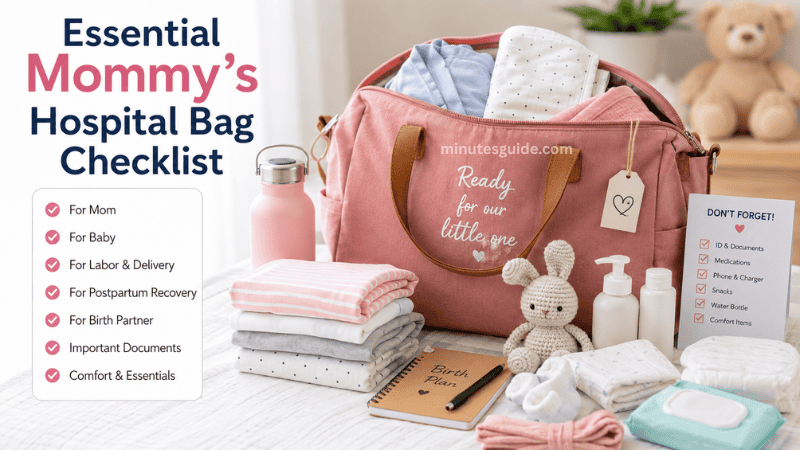
Essential Mommy's Hospital Bag Checklist | Preparing for the arrival of a baby is an exciting experience, but it can also involve plenty of planning, especially as the due date gets closer. One of the most practical things expectant parents can do is prepare a hospital bag in advance so that essential items are ready when labor begins.
A well-organized mommy's hospital bag checklist can make the trip to the hospital considerably less stressful. Instead of trying to remember everything during the excitement of labor, you can simply pick up your prepared bag and focus on getting to the hospital safely.
Although every hospital has different policies and facilities, most mothers will need a combination of personal items, comfortable clothing, postpartum supplies, important documents, baby essentials, and items for their birth partner. It is also important to check with your hospital or maternity unit because some facilities provide items that others expect parents to bring themselves.
This comprehensive mommy's hospital bag checklist explains what to pack for labor, delivery, recovery, your newborn, and your birth partner, along with practical tips for organizing everything efficiently.
Table of Contents
Essential Mommy's Hospital Bag Checklist
When Should You Pack Your Hospital Bag?
There is no single mandatory date for packing a hospital bag because every pregnancy and birth plan is different. However, many maternity services recommend having the bag prepared during the final weeks of pregnancy.
The NHS recommends considering packing the hospital bag at least three weeks before the due date because babies do not necessarily arrive on their expected due date. Some hospitals encourage expectant mothers to have their bags ready around 35 to 37 weeks of pregnancy.
Preparing early does not mean that everything has to remain untouched until labor. Toiletries can continue to be used normally and replaced when necessary, while clothing and baby items can remain packed.
A useful approach is to have the main bag ready several weeks before the due date and keep a small list of last-minute items beside it. Items such as a phone charger, wallet, glasses, daily medication, or personal toiletries can then be added quickly when it is time to leave.
If your healthcare provider has advised you that you may deliver earlier than expected, you may want to prepare your hospital bag sooner.
Should You Use One Bag or Several Bags?
A large suitcase may seem convenient, but it can become difficult to organize and transport once you are at the hospital. Many maternity services recommend keeping the packing practical because storage space may be limited.
One useful strategy is to divide your belongings into two or three smaller bags:
- Labor and delivery bag
- Mother and baby recovery bag
- Birth partner bag
This arrangement makes it easier to find important items without unpacking everything.
For example, your labor bag can contain your identification, medical documents, phone charger, water bottle, comfortable clothing, toiletries, and items you may want during labor. The second bag can contain additional clothing, maternity pads, nursing bras, baby clothes, diapers, and other items needed after delivery.
Keeping the bags organized can be especially helpful when your birth partner needs to find something quickly.
Mommy's Hospital Bag Checklist for Mom
The mother should generally have the largest section of the hospital bag because she may need items for labor, delivery, personal hygiene, postpartum recovery, breastfeeding, and going home.
Here is a detailed mommy's hospital bag checklist for the mother.
1. Hospital Documents and Important Information
Important documents should be placed in an easily accessible section of your bag rather than buried underneath clothing.
Consider packing:
- Hospital or maternity records
- Identification documents
- Insurance information, if applicable
- Birth plan, if you have prepared one
- Relevant medical information
- List of important contact numbers
- Any hospital registration documents you have been instructed to bring
Your hospital may have specific documentation requirements, so check with the maternity unit before your due date.
ACOG also recommends having the hospital bag packed and kept in an accessible location as labor approaches.
2. Comfortable Labor Clothing
You may want to bring loose and comfortable clothing for labor. An old, oversized T-shirt, loose nightdress, or other comfortable garment can be useful.
Avoid packing clothing that you would be uncomfortable getting dirty because labor can be messy.
If you are planning to use a birthing pool or shower, ask your maternity unit whether you need to bring specific clothing or swimwear.
The most important consideration is comfort and freedom of movement rather than appearance.
3. Nightwear and Pajamas
Pack one or two sets of comfortable nightwear for your hospital stay.
Front-opening nightwear can be particularly convenient if you plan to breastfeed because it provides easier access for feeding. Loose-fitting pajamas can also be useful because your body may feel uncomfortable or sensitive after delivery.
Choose clothing that is soft, breathable, and easy to put on and remove.
4. Comfortable Underwear
Underwear is an important part of any mommy's hospital bag checklist because postpartum bleeding can occur after childbirth.
Pack several pairs of large, comfortable underwear. Some mothers prefer disposable postpartum underwear, while others prefer loose cotton underwear that can accommodate maternity pads.
The NHS recommends bringing several pairs of underwear and notes that disposable options may be useful.
5. Maternity Pads
Maternity or postpartum pads are another important item.
Bleeding after childbirth is normal and can be heavier than a typical menstrual period during the early postpartum period. Hospitals may provide maternity pads, but bringing your own can ensure that you have a preferred product available.
Consider packing at least one or two packages of highly absorbent maternity pads, depending on the expected length of your stay and your hospital's recommendations.
The NHS specifically includes super-absorbent maternity pads on its hospital bag checklist.
6. Nursing Bras and Comfortable Bras
If you plan to breastfeed, nursing bras can make feeding easier because they are designed to provide convenient access.
Consider packing two or three comfortable bras so that you have a spare if one becomes wet or uncomfortable.
Even if you are not planning to breastfeed, a comfortable, supportive bra may still be useful during your hospital stay.
7. Breast Pads
Breast pads can help protect your clothing from breast milk leakage.
Some mothers may experience leaking during the early days after childbirth, although the timing and amount can vary considerably between individuals.
If you intend to breastfeed, having several breast pads available can be convenient.
8. Maternity or Postpartum Clothing
Bring several changes of loose, comfortable clothing for your hospital stay.
Good options include:
- Loose cotton tops
- Comfortable pants
- Loose dresses
- Nursing-friendly tops
- Lightweight cardigans
- Comfortable underwear
- A loose outfit for going home
Your postpartum body may feel different from how it felt before pregnancy, so clothing that does not restrict your abdomen is generally more comfortable.
9. Going-Home Outfit
Choose your going-home outfit based on comfort rather than trying to fit into your pre-pregnancy clothing immediately.
Loose pants, a comfortable dress, an oversized top, or another relaxed outfit can be practical.
If you had a cesarean birth, abdominal comfort may be particularly important when selecting clothing. Your healthcare team can also provide specific guidance about recovery and clothing if needed.
10. Slippers and Comfortable Footwear
Slippers or comfortable slip-on footwear can be extremely useful inside the hospital.
Choose footwear that is easy to put on and remove because you may not want to bend down repeatedly after giving birth.
Some hospitals also recommend flip-flops or similar footwear for shower areas.
11. Socks
Hospitals can sometimes feel cool, and some mothers prefer having warm socks available during labor and recovery.
Pack several pairs of comfortable socks so you have extras if one pair becomes uncomfortable or dirty.
12. Toiletries
A personal toiletry bag can make the hospital stay much more comfortable.
Consider packing:
- Toothbrush
- Toothpaste
- Shampoo
- Conditioner
- Body wash or soap
- Facial cleanser
- Deodorant
- Hairbrush
- Hair ties
- Hair clips
- Lip balm
- Moisturizer
- Tissues
- Small towel
- Hand sanitizer
The NHS also recommends packing basic toiletries such as toothpaste, toothbrush, hairbrush, soap, lip balm, deodorant, and a flannel.
Use travel-size containers where practical to reduce the amount of space required.
13. Lip Balm
Lip balm is a small item that is easy to overlook but may be useful during a long hospital stay.
Labor wards can sometimes feel warm or dry, and keeping lip balm nearby can make you more comfortable.
Because it takes up very little space, it is worth including in your mommy's hospital bag checklist.
14. Towels
Check with your hospital before packing towels because some facilities provide them.
If your hospital recommends bringing your own, pack one or two clean towels.
You may also want to use a separate plastic or waterproof bag for damp towels when you are ready to return home.
15. Glasses and Contact Lens Supplies
If you wear glasses, bring your glasses and their protective case.
If you normally wear contact lenses, you should also pack the appropriate lens supplies if you intend to use them.
Many hospital bag checklists recommend bringing spare glasses or contact lenses because personal vision needs should not be overlooked during an unexpected hospital stay.
16. Prescription Medications
Bring information about any medications you regularly take and follow your healthcare team's instructions about medication use during your hospital stay.
Do not assume that you should continue or stop a medication independently. Tell the hospital staff about all regular medicines, including prescribed medicines, so they can advise you appropriately.
Some maternity hospitals specifically advise patients to bring their regular medications and inform staff about them upon admission.
17. Phone and Charger
Your smartphone can be useful for communicating with family members, contacting your birth partner, recording important information, and taking photographs if permitted.
Pack your phone charger in an easy-to-reach pocket.
An extra-long charging cable or portable battery pack may also be useful, depending on your hospital's rules and available electrical outlets. The NHS specifically suggests considering an extra-long charging cable.
18. Water Bottle
A reusable water bottle can be convenient during labor and recovery.
A bottle with a straw or an easy-to-drink design may be especially practical because you may not always be in a comfortable position for drinking from a traditional bottle.
Check with your healthcare team regarding drinking restrictions if you are undergoing a procedure or have been given specific instructions.
19. Snacks
Pack some suitable snacks if your hospital permits them.
Possible choices include crackers, cereal bars, dried fruit, sandwiches, or other foods that are convenient to store and eat.
However, eating and drinking during labor can depend on your individual circumstances and medical plans. Always follow instructions from your healthcare professionals regarding food and drink.
20. Pillow and Comfort Items
A familiar pillow can make the hospital environment feel more comfortable.
You may also want to bring a small blanket or another personal comfort item.
However, avoid bringing too many belongings because hospital storage space can be limited. Some NHS maternity guidance specifically recommends keeping personal belongings to a manageable amount.
Mommy's Hospital Bag Checklist for Baby
Preparing your baby's belongings is just as important as preparing your own.
Newborns generally require relatively simple items during a short hospital stay, but you should confirm the exact requirements with your maternity unit.
1. Newborn Bodysuits
Pack several newborn bodysuits or vests.
Because babies can vary considerably in size, some hospitals recommend bringing clothing in more than one size.
Having a couple of different sizes can be useful if your baby is smaller or larger than expected.
2. Sleepsuits
Pack several comfortable sleepsuits for your newborn.
Choose clothing that is easy to put on and remove, particularly because newborns require frequent diaper changes.
3. Baby Hat
A newborn hat may be useful depending on hospital guidance, room temperature, and local practices.
The NHS includes a hat among the items parents may want to pack for their baby.
4. Baby Socks or Booties
Pack a few pairs of baby socks or booties if recommended by your hospital.
These can help keep your baby's feet comfortable, although clothing needs will depend on the temperature and the baby's overall condition.
5. Baby Mittens
Some parents choose to pack baby mittens to help prevent accidental scratching.
However, mittens are not necessarily required in every hospital, so check your maternity unit's recommendations.
6. Newborn Diapers
Bring an adequate supply of newborn diapers.
The number required will depend on how long you remain in the hospital and whether your hospital provides diapers.
If your hospital does not provide them, bringing enough for the expected stay plus a small reserve can be helpful.
7. Muslin Cloths
Muslin cloths are versatile and can be useful for wiping small spills, protecting clothing, or handling everyday newborn messes.
Pack several because they are lightweight and easy to wash.
8. Baby Wipes or Cotton Wool
Your hospital may recommend cotton wool and water instead of conventional wipes for newborn care.
Some hospitals provide their own supplies, while others ask parents to bring them.
Follow your maternity unit's guidance regarding newborn skin care.
9. Baby Blanket
A soft baby blanket can be useful when transporting your newborn or keeping the baby comfortable.
The appropriate type of blanket depends on the temperature and your healthcare provider's advice.
10. Going-Home Outfit
Pack one complete outfit specifically for your baby's journey home.
Depending on the weather, this may include:
- Bodysuit
- Sleepsuit
- Socks
- Hat
- Cardigan or outer layer
- Blanket
Choose clothing that is easy to put on and appropriate for the weather.
11. Properly Installed Car Seat
If you are traveling home by car, arrange an appropriate infant car seat in advance and make sure it is installed correctly.
ACOG specifically recommends having a car seat ready for bringing the baby home and ensuring that it is installed properly.
The car seat does not necessarily need to remain inside the hospital room. Depending on hospital policy, your birth partner may be able to bring it when you are ready for discharge.
Hospital Bag Checklist for the Birth Partner
The birth partner should have a separate small bag or section of the main bag.
Useful items include:
- Change of clothes
- Comfortable footwear
- Toothbrush
- Toothpaste
- Deodorant
- Phone
- Phone charger
- Snacks
- Drinks
- Personal medications
- Spare glasses if needed
- Cash or payment method
- Entertainment such as a book or headphones
The birth partner may spend many hours at the hospital, so basic personal supplies can make the experience more comfortable.
It is also useful for the birth partner to know where everything is located inside the hospital bag.
Optional Items for Labor and Recovery
Not every mother will want the same comfort items.
Depending on your preferences and hospital policies, you may consider bringing:
- Eye mask
- Earplugs
- Portable fan
- Water spray
- Music playlist
- Headphones
- Tablet
- Book
- Magazine
- Massage tools
- TENS machine if you have discussed its use with your healthcare provider
- Small notebook
- Extra pillow
- Personal photographs or comfort items
The NHS includes items such as an eye mask, fan or water spray, entertainment, and a TENS machine among optional hospital-bag suggestions.
Avoid bringing expensive jewelry, large amounts of cash, or other valuables unless they are genuinely necessary. Some hospitals specifically advise against bringing valuable items because storage and security may be limited.
Items You May Not Need to Pack
A hospital bag can become unnecessarily large if you try to prepare for every possible situation.
Before packing, check what your hospital already provides.
Depending on the facility, you may not need to bring:
- Large quantities of towels
- Excessive amounts of baby clothing
- Large toiletries
- Too many blankets
- Large amounts of entertainment
- Unnecessary electronics
- Expensive personal belongings
- Equipment that the hospital already provides
The goal is to bring useful essentials rather than an entire household.
How to Organize Your Mommy's Hospital Bag Checklist
Organization can be just as important as the items themselves.
Consider using small packing cubes or separate pouches for different categories.
For example, one pouch can contain toiletries, another can contain postpartum supplies, and another can contain baby accessories.
You can also label bags with simple descriptions such as "Mom," "Baby," "Labor," and "Going Home."
Keep the most important documents and immediately needed items near the top of the bag.
Your birth partner should also know where the essential items are located because you may not feel like searching through the bag during labor.
Create a Last-Minute Hospital Bag List
Even after your hospital bag is packed, some everyday items cannot be packed permanently.
Create a separate last-minute list containing items such as:
- Phone
- Phone charger
- Wallet
- Identification
- Glasses
- Daily medications
- Water bottle
- Keys
- Any personal toiletries still being used
Place this list somewhere visible near your bag.
When it is time to leave for the hospital, you can quickly check the list instead of relying on memory.
Check Your Hospital's Specific Requirements
One of the most important parts of preparing a mommy's hospital bag checklist is checking your own hospital's requirements.
Different hospitals have different policies regarding diapers, maternity pads, towels, clothing, feeding supplies, electrical devices, food, and other personal belongings.
Some facilities provide many basic supplies, while others expect parents to bring most items themselves.
Your maternity team can also explain what you should bring based on your planned type of delivery and individual circumstances.
Therefore, a general checklist should be treated as a starting point rather than a universal packing requirement.
Final Mommy's Hospital Bag Checklist
Before leaving for the hospital, use this condensed checklist to make sure you have covered the essentials.
| Category | Essential Items |
|---|---|
| Documents | Hospital records, identification, birth plan |
| Clothing | Labor clothes, pajamas, loose clothing, going-home outfit |
| Underwear | Comfortable underwear, disposable underwear if preferred |
| Postpartum care | Maternity pads, breast pads |
| Bras | Comfortable or nursing bras |
| Footwear | Slippers, comfortable shoes |
| Toiletries | Toothbrush, toothpaste, soap, shampoo, deodorant, hairbrush |
| Comfort | Pillow, eye mask, lip balm, fan or water spray |
| Electronics | Phone, charger, headphones |
| Food and drinks | Water bottle and permitted snacks |
| Medication | Regular medications and medication information |
| Baby clothing | Bodysuits, vests, sleepsuits, socks, hat |
| Baby care | Diapers, muslin cloths, cotton wool or wipes |
| Baby comfort | Blanket or shawl |
| Going home | Baby's going-home outfit |
| Transportation | Properly installed infant car seat |
| Birth partner | Clothes, toiletries, snacks, phone charger |
Final Thoughts
Preparing a mommy's hospital bag checklist well before the due date can provide greater peace of mind and make the transition to the hospital more organized. Rather than trying to remember dozens of items while experiencing the excitement and uncertainty surrounding labor, having everything prepared allows you to concentrate on yourself, your baby, and the support you need.
The most important items generally include your hospital documents, comfortable clothing, postpartum supplies, toiletries, medications, phone and charger, food and drinks where permitted, and essential items for your newborn. Your birth partner should also have basic clothing, toiletries, food, and communication equipment available.
At the same time, avoid the temptation to overpack. Hospital rooms often have limited storage space, and bringing too many belongings can make it harder to locate the things you actually need. Dividing your belongings into clearly organized bags can make the experience considerably easier.
Finally, remember that every hospital has its own policies and available supplies. Check directly with your maternity unit before your due date so that your mommy's hospital bag checklist reflects the specific requirements of the facility where you plan to give birth.
With thoughtful preparation, a practical packing strategy, and a clearly organized checklist, you can approach the final weeks of pregnancy feeling more prepared for your baby's arrival.
Frequently Asked Questions About a Mommy's Hospital Bag Checklist
When should I pack my hospital bag?
It is generally a good idea to have your hospital bag packed several weeks before your due date. Preparing it in advance gives you enough time to purchase missing items and make sure important documents and personal essentials are ready. If your healthcare provider has advised that you may deliver earlier than expected, you may want to pack even sooner.
What should I pack in my hospital bag for labor?
Essential items for labor can include comfortable clothing, toiletries, maternity pads, a water bottle, snacks if permitted, your phone and charger, important medical documents, and any personal comfort items you may want during labor. Your specific needs may vary depending on your hospital's policies and your birth plan.
How many maternity pads should I bring to the hospital?
The amount you need depends on the length of your hospital stay and whether the hospital provides maternity pads. Bringing at least one package of highly absorbent maternity pads can be practical, although you may want to pack more if your hospital does not provide them.
What clothes should I bring for after giving birth?
Choose loose, comfortable clothing that is easy to put on and does not place unnecessary pressure on your abdomen. Comfortable pajamas, loose tops, nursing-friendly clothing, comfortable underwear, and a relaxed going-home outfit are useful choices.
What should I pack for my newborn?
Newborn essentials can include bodysuits, vests, sleepsuits, socks, a hat if recommended, diapers, muslin cloths, cotton wool or suitable wipes, a blanket, and an appropriate going-home outfit. You should check with your hospital because some facilities provide certain baby-care supplies.
Does my baby need a car seat when leaving the hospital?
If you are traveling home by car, an appropriate infant car seat should be prepared before the baby arrives. Make sure the car seat is correctly installed according to the manufacturer's instructions and applicable local safety requirements.
Should I pack a separate bag for my birth partner?
A separate small bag for your birth partner can make the hospital stay more convenient. It can contain a change of clothes, toiletries, snacks, drinks, a phone charger, personal medications, and other items the birth partner may need during the stay.
Do hospitals provide diapers and maternity pads?
Hospital policies vary. Some hospitals provide certain basic supplies, while others expect parents to bring their own diapers, maternity pads, toiletries, and other personal items. Contact your maternity unit before your due date to find out exactly what is provided.
Should I bring my own toiletries to the hospital?
Yes. Bringing basic personal toiletries can make your hospital stay more comfortable, particularly if you have specific products you prefer to use. Useful items include a toothbrush, toothpaste, soap, shampoo, deodorant, hairbrush, lip balm, and moisturizer.
What should I keep in my hospital bag for breastfeeding?
If you plan to breastfeed, consider packing comfortable nursing bras, breast pads, front-opening nightwear, and loose clothing that provides convenient access for feeding. You may also want to bring any breastfeeding-related items recommended by your healthcare team.
Should I bring food and drinks to the hospital?
You can consider bringing suitable snacks and a reusable water bottle if your hospital permits them. However, eating and drinking during labor may depend on your individual medical circumstances, planned procedures, and hospital policies, so always follow the instructions provided by your healthcare team.
What items should I avoid packing in my hospital bag?
Avoid unnecessarily valuable items, excessive clothing, large quantities of toiletries, and belongings that your hospital already provides. Keeping your hospital bag reasonably compact can make it easier to transport and organize, particularly when storage space is limited.
How can I organize my mommy's hospital bag?
Consider separating items into smaller pouches or packing cubes for categories such as labor supplies, toiletries, postpartum care, baby clothing, and documents. Labeling sections or using separate bags for mother, baby, and birth partner can also make important items easier to find quickly.
What should I keep ready for last-minute packing?
Some everyday items cannot be packed permanently because you may still use them before going to the hospital. Prepare a last-minute list containing your phone, charger, wallet, identification, glasses, daily medications, keys, and any toiletries that you use regularly. Keep this list somewhere visible near your packed hospital bag.
What is the most important thing to remember when preparing a hospital bag?
The most important thing is to prepare according to your own needs and your hospital's requirements rather than trying to pack everything. A well-organized mommy's hospital bag checklist should cover essential documents, comfortable clothing, postpartum supplies, personal toiletries, newborn necessities, and items needed by your birth partner.
References
- Hospital Bag Checklist: What to Pack in? - thebump.com
- Hospital bag checklist - Best Start in Life - nhs.uk